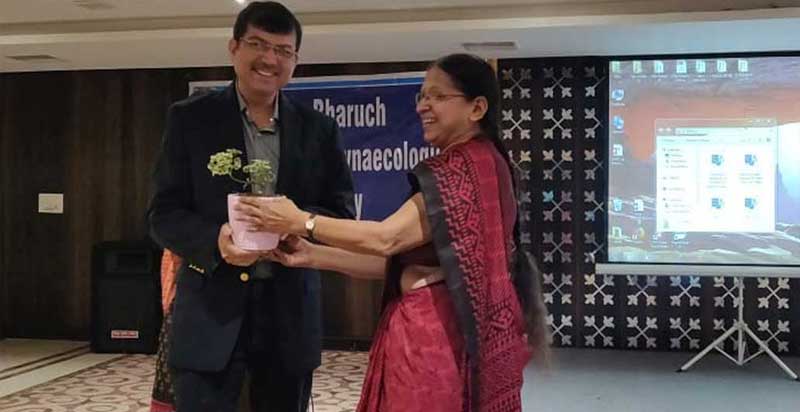
It was a pleasure to take a lecture at the Bharuch Obstetrics and Gynaecological Society on the immunomodulatory effects of progesterone in pregnancy. This is a subject that sits at the fascinating intersection of hormones and the immune system, and it is one that has important practical implications for how we care for pregnant women. Speaking on it before the engaged clinicians of Bharuch, on behalf of Paaranu Women’s Superspecialities, was a genuinely rewarding experience.
Progesterone is often described simply as the hormone of pregnancy, and with good reason. It prepares the womb to receive an embryo and helps sustain the pregnancy in its earliest and most vulnerable weeks. But its role goes well beyond this familiar picture, and it is the less appreciated immunological side of progesterone that formed the heart of my lecture.
Pregnancy presents the body with a remarkable challenge. The developing baby carries genetic material from both parents, which means that, to the mother’s immune system, it is not entirely her own. In any other setting, the body would be inclined to react against such tissue. Yet in a healthy pregnancy, the mother’s immune system adapts to accept and protect the baby rather than reject it. Progesterone is one of the key messengers that helps make this delicate balance possible, gently steering the immune response toward tolerance so that the pregnancy can flourish.
In the lecture, I explored how progesterone contributes to this protective shift, and why an understanding of these mechanisms matters at the bedside. This knowledge helps explain the rationale behind the use of progesterone support in certain situations, particularly for women with a history of pregnancy loss or those undergoing fertility treatment. At the same time, I was careful to stress the importance of using such support thoughtfully and in line with the evidence, rather than as a routine applied to everyone.
My aim throughout was to make a complex subject clear and clinically useful. It is easy for immunology to feel abstract and distant from daily practice, but when clinicians understand why a treatment works, they apply it more wisely and counsel their patients more confidently. Bridging the gap between the science and the clinic is exactly what a good continuing education session should do.
The discussion that followed was lively and thoughtful, with questions that reflected the real dilemmas clinicians face in managing pregnancies at risk. As always, I learned a great deal from the experience and perspective of my colleagues in Bharuch.
At Paaranu Women’s Superspecialities, we believe that a deep understanding of the science behind pregnancy leads directly to better care for mothers and babies. Sharing that understanding with the wider medical community multiplies its benefit far beyond our own practice.
I thank the Bharuch Obstetrics and Gynaecological Society for their kind invitation and warm hospitality, and everyone who attended for their engagement. It is a privilege to explore such an important topic with fellow clinicians, and I look forward to many more such academic exchanges.