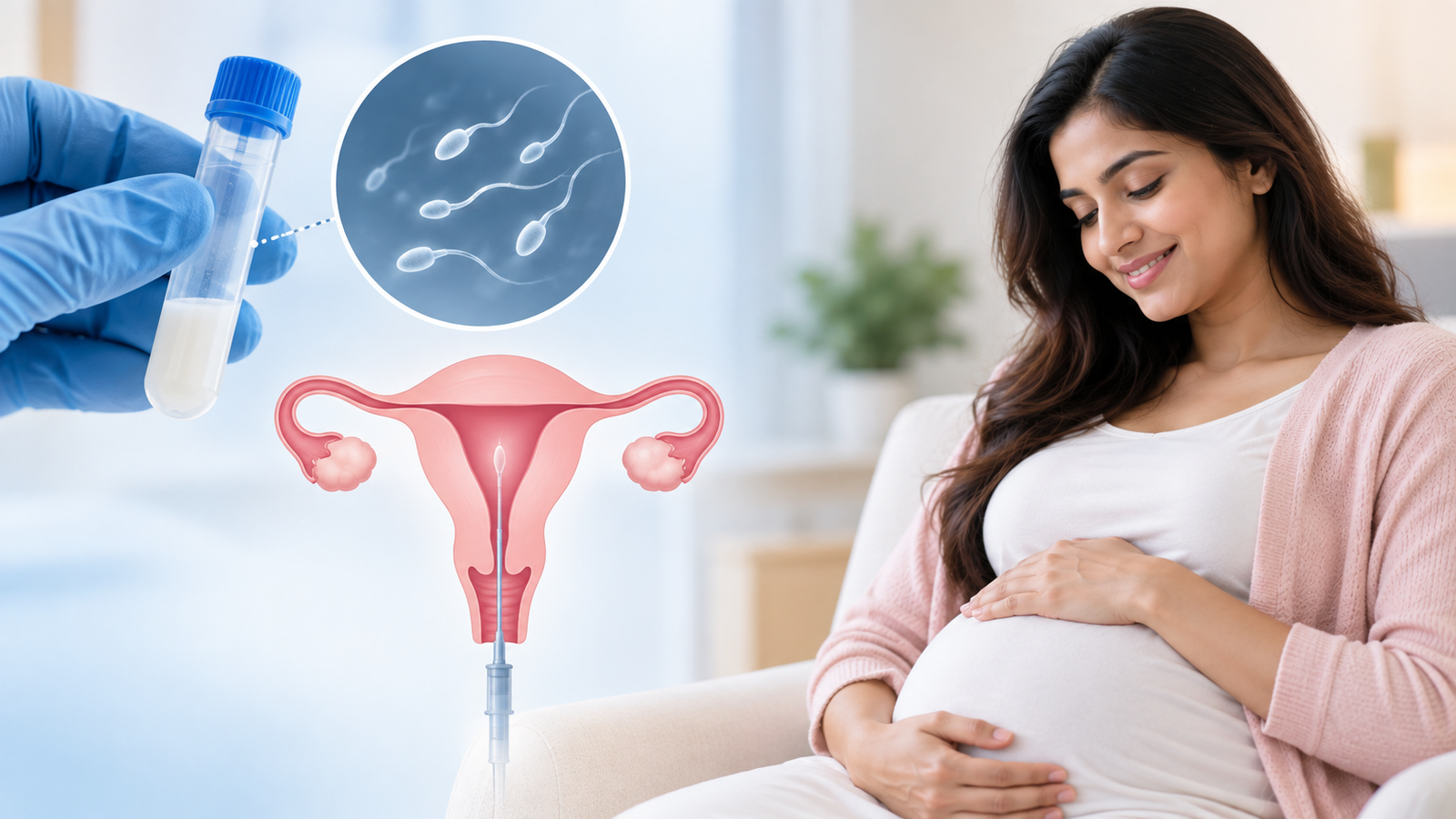
For some individuals and couples, using donor sperm may provide a possible route to pregnancy when sperm-related fertility problems make conception difficult or when treatment circumstances require donor sperm. Donor sperm IUI in Surat combines screened donor sperm with intrauterine insemination (IUI), a fertility procedure that places prepared sperm directly into the uterus around the time of ovulation.
The fertility team first evaluates the patient’s reproductive health, ovulation, fallopian tubes, medical history, and previous fertility treatment before recommending donor sperm IUI. The team also considers whether IUI offers a reasonable treatment option or whether another assisted reproductive treatment may better suit the individual situation.
At Paaranu IVF, fertility specialists evaluate individual fertility factors before recommending IUI or another treatment approach.
What Is Donor Sperm IUI?
Donor sperm IUI uses donor sperm instead of sperm from the intended father or male partner during an intrauterine insemination cycle.
During IUI treatment in Surat, the fertility team plans insemination close to ovulation. At the appropriate time, the doctor introduces prepared sperm directly into the uterus through a thin catheter.
Placing sperm inside the uterus shortens the distance sperm must travel through the reproductive tract. Fertilization itself still needs to occur naturally inside the fallopian tube.
This point distinguishes IUI from IVF. During IVF, embryologists fertilize eggs in a laboratory before transferring an embryo into the uterus. With IUI, fertilization occurs inside the body.
Who May Need Donor Sperm IUI?
Fertility specialists may discuss donor sperm IUI in Surat in selected circumstances where donor sperm provides an appropriate reproductive option.
These circumstances may include:
- Severe male-factor infertility in selected cases
- Absence of sperm in the ejaculate when other appropriate treatment options are unsuitable or unsuccessful
- Certain genetic concerns where using donor sperm may form part of the treatment discussion
- Previous fertility treatment where the couple and fertility specialist decide to consider donor sperm
- Other situations where donor sperm use meets medical and applicable legal requirements
Using donor sperm involves medical, emotional, and legal considerations. Patients should discuss these aspects carefully with their fertility specialist before beginning treatment.
Is IUI Suitable for Everyone Using Donor Sperm?
No. Having access to donor sperm does not automatically make IUI the appropriate treatment.
For IUI to offer a reasonable opportunity for fertilization, the fertility specialist needs to consider the woman’s reproductive health.
The evaluation may include:
- Age
- Ovulation
- Ovarian reserve
- Fallopian tube health
- Uterine health
- Duration of infertility
- Previous fertility treatment
- Other medical or reproductive conditions
Because fertilization during IUI occurs inside the body, sperm generally needs access to an egg through a functional fallopian tube. Significant tubal disease or other complex fertility problems may lead the doctor to discuss IVF instead.
How Does Donor Sperm IUI in Surat Work?
The exact protocol varies according to individual fertility needs, but treatment generally follows several stages.
1. Initial Fertility Evaluation
The process starts with a fertility consultation.
The fertility specialist reviews the patient’s medical history, menstrual cycles, reproductive history, previous fertility treatments, and other relevant factors.
Depending on the circumstances, testing may include:
- Pelvic ultrasound
- Ovarian reserve assessment
- Hormonal tests
- Ovulation assessment
- Evaluation of the uterus
- Assessment of fallopian tube patency
- Other tests based on medical history
These investigations help the fertility team decide whether IUI represents an appropriate treatment option.
2. Donor Screening and Selection
Donor sperm treatment must follow applicable assisted reproductive technology regulations and clinical requirements in India.
The relevant authorized system or facility handles donor eligibility and screening according to applicable requirements. Screening helps identify medical and other relevant factors before the sperm enters the treatment process.
Patients should ask their fertility clinic about the donor process, what screening applies, what donor information they may legally receive, and which consent documents they need to complete.
How Is Ovulation Managed?
Timing plays an important role in IUI because insemination needs to occur close to ovulation.
The fertility team may plan treatment around a natural menstrual cycle or use fertility medicines when clinically appropriate.
Natural-Cycle IUI
Women who ovulate regularly may undergo monitoring to identify when ovulation will occur.
The fertility team can then schedule insemination around the expected ovulation window.
Stimulated IUI
In some situations, the fertility specialist may prescribe medicines to support follicle development and control treatment timing.
Ultrasound monitoring helps the team assess follicle growth and decide when to schedule insemination.
Patients should take medicines exactly as instructed and attend scheduled monitoring appointments.
What Happens to the Donor Sperm Before IUI?
Before insemination, the laboratory prepares the sperm for the procedure.
Sperm preparation aims to provide an appropriate sample for intrauterine placement. The fertility team coordinates preparation with the planned insemination time.
The patient does not need to understand every laboratory step, but the clinic should explain how the sample will be handled and how treatment timing works.
What Happens During the IUI Procedure?
The IUI procedure itself usually takes only a short time.
The patient lies on an examination table while the doctor gently places a speculum into the vagina to visualize the cervix. The doctor then passes a thin catheter through the cervix and introduces the prepared sperm into the uterus.
IUI does not require an abdominal incision or egg retrieval.
Some women may notice mild cramping or temporary discomfort, but experiences vary.
After the procedure, most patients can return to normal daily activities unless their fertility specialist gives different instructions.
Why Is Timing Important in Donor Sperm IUI?
An egg remains available for fertilization for a limited period after ovulation. The fertility team therefore aims to coordinate insemination with the expected ovulation window.
Doctors may use ultrasound monitoring, hormonal assessment, ovulation prediction, or medication depending on the treatment protocol.
Following the clinic’s schedule for scans, medication, and insemination helps maintain this coordination.
What Happens After Donor Sperm IUI?
After insemination, the fertility specialist provides instructions about medication, physical activity, follow-up, and pregnancy testing.
Patients usually do not need prolonged bed rest after an uncomplicated IUI.
The clinic will tell the patient when to perform a pregnancy test. Testing too early may produce a misleading result, so following the recommended testing date is important.
If the test confirms pregnancy, the fertility team may arrange further blood tests or ultrasound monitoring as appropriate.
What Factors Affect Donor Sperm IUI Success?
Using screened donor sperm addresses the sperm-source component of treatment, but it does not remove other factors that influence conception.
Woman’s Age
Age can affect egg quantity and reproductive potential. This remains important even when treatment uses donor sperm.
Ovulation
Successful IUI requires appropriate coordination with ovulation.
Irregular or absent ovulation may require additional treatment and monitoring.
Fallopian Tube Health
Because fertilization occurs inside the reproductive tract, the sperm and egg need an appropriate environment in which to meet.
Fallopian tube problems can therefore affect whether IUI offers a suitable treatment option.
Egg Quality
Donor sperm does not change the quality of the patient’s eggs. Egg-related factors can still influence fertilization and pregnancy.
Underlying Fertility Conditions
Endometriosis, ovarian reserve, uterine conditions, hormonal problems, and other reproductive factors may influence treatment planning and outcomes.
Treatment Timing
Careful monitoring helps the fertility team coordinate insemination with ovulation.
Does Donor Sperm IUI Guarantee Pregnancy?
No. Donor sperm IUI does not guarantee pregnancy.
Even when the clinic uses an appropriately screened donor sample and schedules insemination around ovulation, several biological steps must still occur.
The sperm must reach and fertilize the egg, and the resulting embryo must develop, travel to the uterus, and implant successfully.
Age, egg quality, ovulation, tubal health, uterine factors, and underlying fertility conditions can all affect the outcome.
Patients should therefore discuss their individual circumstances rather than relying on a general IUI success-rate figure.
Donor Sperm IUI vs Donor Sperm IVF
Donor sperm can form part of either IUI or IVF treatment, but the two approaches work differently.
| Factor | Donor Sperm IUI | Donor Sperm IVF |
|---|---|---|
| Fertilization | Takes place inside the body | Takes place in the laboratory |
| Egg retrieval | Not required | Required |
| Embryo culture | Not required | Required |
| Embryo transfer | Not required | Required |
| Insemination | Sperm enters the uterus through a catheter | Sperm fertilizes retrieved eggs in the laboratory |
| Treatment complexity | Generally less complex | More involved treatment process |
| Suitable for | Selected patients with appropriate reproductive factors | May suit more complex fertility conditions |
Neither treatment is automatically better for every patient.
If IUI does not offer a reasonable treatment option because of tubal problems, ovarian factors, age, previous treatment history, or other fertility conditions, the doctor may discuss IVF treatment instead.
What About Severe Male-Factor Infertility?
Before moving to donor sperm, some couples with male-factor infertility may have other treatment options depending on the cause and available sperm.
One such option is ICSI.
During ICSI treatment in Surat, an embryologist selects a sperm and injects it directly into a mature egg as part of an IVF cycle.
ICSI may help in selected cases involving low sperm count, poor sperm motility, abnormal morphology, or other fertilization difficulties.
The fertility specialist can explain whether treatment using the male partner’s sperm remains feasible or whether donor sperm deserves consideration.
What Should You Ask Before Donor Sperm IUI?
Before beginning treatment, patients should understand both the procedure and the donor process.
Consider asking your fertility specialist:
- Why do you recommend donor sperm in my situation?
- Is IUI suitable for my reproductive health?
- Do I need fallopian tube testing before treatment?
- How does donor screening work?
- What information can I receive about the donor?
- What legal consent requirements apply?
- Will I need fertility medicines?
- How will you monitor ovulation?
- When will you perform the insemination?
- When should I take a pregnancy test?
- How many IUI cycles might we consider before reviewing the treatment plan?
- When would IVF become a more appropriate option?
Clear answers can help patients understand the treatment before making a decision.
Preparing for Donor Sperm IUI
Preparation depends on the individual treatment plan.
Attend all scheduled ultrasound scans and blood tests, and take prescribed medicines exactly as instructed.
Tell the fertility specialist about any prescription medicines, supplements, previous fertility procedures, surgeries, or ongoing medical conditions.
General preconception measures may include maintaining a balanced diet, avoiding smoking, following medical advice about alcohol, and managing existing health conditions.
No special food, supplement, or home remedy can guarantee IUI success.
Donor Sperm IUI in Surat at Paaranu IVF
For patients considering donor sperm IUI in Surat, Paaranu IVF provides fertility evaluation and assisted reproductive treatments in Surat.
Paaranu IVF offers IUI treatment in Surat alongside IVF, ICSI, IMSI, and other fertility services.
Dr. Jayesh Patel, MD, D.G.O., Clinical Director at Paaranu IVF, has more than 25 years of experience in gynecology, fertility, and fetal medicine.
The first step involves evaluating whether IUI suits the patient’s reproductive circumstances. The fertility team can then explain the treatment protocol, ovulation monitoring, insemination timing, donor-related requirements, and alternative fertility options when appropriate.
Conclusion
Donor sperm IUI in Surat may provide a fertility treatment option for selected patients who require donor sperm and have reproductive factors that make intrauterine insemination appropriate.
The process starts with fertility evaluation and donor-related screening requirements. The fertility team then monitors or manages ovulation, prepares the sperm sample, and places it directly into the uterus at the appropriate time.
Donor sperm does not guarantee pregnancy. Age, egg quality, ovulation, fallopian tube health, uterine factors, and other fertility conditions continue to influence treatment outcomes.
A detailed consultation can help patients understand whether donor sperm IUI suits their circumstances or whether another assisted reproductive treatment offers a more appropriate approach.
Frequently Asked Questions
What is donor sperm IUI?
Donor sperm IUI uses an appropriately screened donor sperm sample for intrauterine insemination. During the procedure, the fertility specialist places prepared sperm directly into the uterus close to ovulation.
Who may consider donor sperm IUI?
A fertility specialist may discuss donor sperm in selected cases involving severe male-factor infertility, absence of usable sperm, certain genetic concerns, or other medically and legally appropriate circumstances.
Do I need IVF when using donor sperm?
Not necessarily. Some patients may use donor sperm with IUI. Others may require IVF because of age, fallopian tube problems, ovarian factors, previous treatment history, or other fertility conditions.
Is donor sperm screened before IUI?
Donor sperm use must follow applicable screening, eligibility, consent, and assisted-reproduction requirements. Your fertility clinic can explain the process that applies to your treatment.
Is donor sperm IUI painful?
IUI is a minimally invasive procedure. Some women experience mild cramping or temporary discomfort, but individual experiences vary.
How is donor sperm IUI timed?
The fertility team schedules insemination around ovulation. Doctors may use ultrasound, hormonal monitoring, natural-cycle tracking, or fertility medicines depending on the treatment protocol.
Does donor sperm IUI guarantee pregnancy?
No. Donor sperm IUI cannot guarantee pregnancy. Age, egg quality, ovulation, tubal health, uterine factors, and other fertility conditions can influence the outcome.
What happens if donor sperm IUI does not work?
The fertility specialist reviews the treatment response and relevant fertility factors. Depending on the circumstances, the doctor may discuss another IUI cycle, additional evaluation, IVF, or another appropriate fertility treatment.