Fertility does not always follow the same timeline as life plans. Some people may want to delay pregnancy, while others may need medical treatment that could affect their reproductive potential. In these situations, cryopreservation in Surat can provide an option to preserve eggs, sperm, or embryos for possible future use.
Cryopreservation is a fertility-preservation technique in which reproductive cells or embryos are frozen at extremely low temperatures and stored under carefully controlled laboratory conditions.
At Paaranu IVF in Surat, fertility care is led by Dr. Jayesh Patel, MD, D.G.O., Clinical Director, who has over 25 years of experience in gynecology, fertility, and fetal medicine.
What Is Cryopreservation in Fertility Treatment?
Cryopreservation is the process of freezing and storing biological material so that it can potentially be used at a later date.
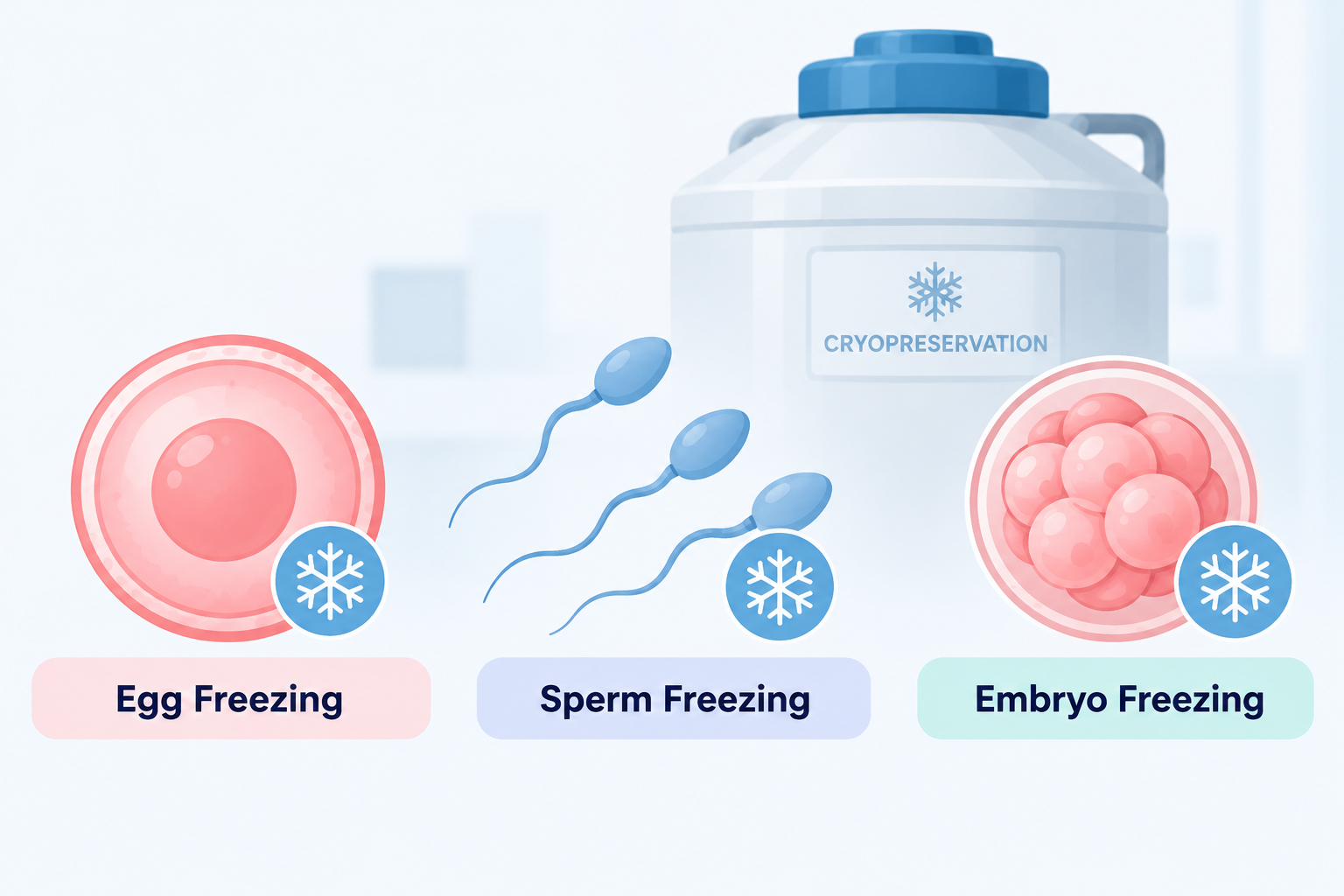
In reproductive medicine, cryopreservation may involve:
- Eggs or oocytes
- Sperm
- Embryos
- Ovarian tissue in selected situations
- Testicular tissue in specific circumstances
Modern fertility laboratories commonly use cryopreservation as part of IVF and fertility-preservation treatment.
The American Society for Reproductive Medicine notes that egg, embryo, and sperm cryopreservation are established fertility-preservation strategies in appropriate patients.
Why Is Cryopreservation Used in Fertility Treatment?
There are several reasons why a fertility specialist may discuss cryopreservation.
It may help people who:
- Want to delay pregnancy
- Are undergoing IVF treatment
- Have additional good-quality embryos after an IVF cycle
- Are planning chemotherapy or radiation therapy
- Have a medical condition that may affect future fertility
- Have declining ovarian reserve
- Need sperm preservation before certain medical treatments
- Are unable to provide a fresh sperm sample on the day of fertility treatment
- Want to preserve reproductive options for the future
The reason for cryopreservation differs from one patient to another, so treatment planning should be individualised.
What Is Egg Cryopreservation?
Egg cryopreservation, commonly called egg freezing, involves collecting mature eggs from the ovaries and freezing them for possible future use.
The process generally involves:
- Ovarian stimulation with fertility medicines
- Ultrasound and hormonal monitoring
- Egg retrieval
- Laboratory assessment
- Freezing of suitable mature eggs
- Cryogenic storage
When the patient later wants to use the eggs, they are warmed and may be fertilised with sperm using IVF or ICSI.
According to current ASRM guidance, mature oocyte cryopreservation is an established fertility-preservation technique. The patient’s age at freezing and the number of eggs stored can influence the possibility of future success.
Who May Consider Egg Freezing?
Egg freezing may be considered in several situations.
These may include:
- Women who want to postpone pregnancy
- Women undergoing cancer treatment
- Patients with certain medical conditions affecting ovarian function
- Women who may require ovarian surgery
- Patients at risk of premature ovarian insufficiency
- Women who want to preserve eggs before age-related fertility decline progresses further
Egg freezing does not guarantee a future pregnancy. The likelihood of success depends on several factors, particularly the woman’s age when the eggs are frozen and the number and quality of eggs stored.
What Is Sperm Cryopreservation?
Sperm cryopreservation, also known as sperm freezing or sperm banking, involves collecting, processing, and freezing sperm for future use.
Sperm can later be used in fertility treatments such as:
- IUI
- IVF
- ICSI
For post-pubertal males, ejaculated sperm cryopreservation is an established fertility-preservation technique. When cancer treatment or another fertility-threatening therapy is planned, sperm collection is generally recommended before treatment begins whenever possible.
Patients with sperm-related fertility concerns can also learn more about male infertility treatment in Surat at Paaranu IVF.
Who May Need Sperm Freezing?
Sperm freezing may be considered for men who:
- Are preparing for chemotherapy or radiotherapy
- Have a medical condition that may affect sperm production
- Are planning certain surgeries
- Have progressively declining sperm quality
- May be unavailable on the day of fertility treatment
- Have difficulty producing a semen sample on demand
- Are undergoing surgical sperm retrieval
- Want to preserve fertility before treatment that may affect testicular function
The fertility specialist may recommend semen analysis before storage to understand sperm count, movement, and quality.
What Is Embryo Cryopreservation?
Embryo cryopreservation involves freezing embryos created through IVF for possible future transfer.
During IVF:
- Doctors retrieve eggs from the ovaries.
- Embryologists fertilise the eggs with sperm in the laboratory.
- The embryology team monitors embryo development.
- The team may transfer suitable embryos or freeze them for future use.
- Patients can use frozen embryos in a later treatment cycle.
Embryo cryopreservation plays an established role in fertility preservation and forms a routine part of modern IVF treatment.
Patients considering IVF can explore Paaranu IVF’s fertility treatments in Surat to understand the different assisted reproductive options available.
Why Are Embryos Frozen During IVF?
There are several reasons embryos may be frozen.
Extra Suitable Embryos
An IVF cycle may produce more suitable embryos than are transferred in the same cycle.
These embryos may be cryopreserved for future use.
Frozen Embryo Transfer
Sometimes, the doctor may recommend transferring the embryo during a later menstrual cycle rather than immediately after ovarian stimulation.
Future Pregnancy
Patients who achieve pregnancy after IVF may choose to retain cryopreserved embryos for a possible future sibling attempt, subject to applicable consent and regulatory requirements.
Medical Reasons
In some situations, delaying embryo transfer may be medically appropriate.
The final decision depends on embryo development, hormone levels, uterine conditions, and the patient’s overall treatment plan.
How Are Eggs and Embryos Frozen?
Many IVF laboratories use a rapid-freezing technique called vitrification.
Vitrification cools cells extremely quickly, helping minimise the formation of damaging ice crystals.
ASRM has published laboratory guidance describing rapid-cooling vitrification as a widely used technique for cryopreservation of eggs and embryos.
Not every egg or embryo will necessarily survive freezing and warming. Laboratory quality, biological factors, and the characteristics of the individual eggs or embryos can all affect outcomes.
At What Temperature Are Eggs, Sperm and Embryos Stored?
Cryopreserved reproductive material is stored at extremely low temperatures, commonly using liquid-nitrogen-based storage systems.
Such storage allows biological activity to be reduced to a very low level.
Cryostorage requires strict laboratory procedures because eggs, embryos, and sperm can be irreplaceable reproductive material. ASRM recommends stringent storage practices and monitoring for reproductive tissues.
How Long Can Eggs, Sperm or Embryos Be Frozen?
Cryopreserved reproductive material can potentially remain stored for extended periods when maintained under appropriate laboratory conditions.
However, the permitted storage duration and renewal requirements may depend on:
- Indian ART regulations
- Clinic policies
- Patient consent
- Storage agreements
- Future reproductive plans
Patients should ask their fertility clinic about:
- Storage duration
- Annual storage charges
- Consent renewal
- Transfer policies
- Disposal or future-use instructions
Does Freezing Damage Eggs, Sperm or Embryos?
Cryopreservation is widely used in fertility medicine, but no laboratory process is completely risk-free.
Possible issues include:
- Some eggs may not survive warming
- Some embryos may not survive warming
- Sperm motility may change after freezing and thawing
- Not every stored sample will result in fertilisation or pregnancy
Modern vitrification techniques have significantly improved cryopreservation outcomes, especially for eggs and embryos.
The fertility specialist and embryology team should explain the realistic chances for an individual patient rather than promising guaranteed survival or pregnancy.
Is Cryopreservation Safe?
Cryopreservation is an established component of assisted reproductive medicine.
Safety depends on several factors, including:
- Correct laboratory procedures
- Proper specimen identification
- Storage monitoring
- Infection-control systems
- Reliable cryogenic equipment
- Emergency procedures
- Accurate documentation and consent
Professional recommendations emphasise maintaining strict procedures for stored reproductive tissues because these samples may be unique and irreplaceable.
Can Cancer Patients Preserve Their Fertility?
Yes. Fertility preservation may be particularly important for patients who are preparing for treatments such as chemotherapy, radiotherapy, or some surgeries that could affect reproductive function.
For women, possible options may include:
- Egg freezing
- Embryo freezing
- Ovarian tissue preservation in selected cases
For men, sperm freezing is often one of the main fertility-preservation options.
Current ASRM guidance recommends prompt counselling about fertility-preservation options for patients whose planned medical treatment may impair reproductive function.
Timing is important, so fertility specialists and the treating medical team should ideally coordinate care before fertility-threatening treatment begins.
What Is the Difference Between Egg Freezing and Embryo Freezing?
The major difference is whether fertilisation has already occurred.
Egg freezing stores unfertilised eggs.
Embryo freezing stores eggs that have already been fertilised and developed into embryos.
Egg freezing may provide greater flexibility regarding the future sperm source.
Embryo freezing provides information about whether fertilisation and early embryo development have already occurred.
Which option is more appropriate depends on factors such as:
- Relationship status
- Medical circumstances
- Age
- Fertility diagnosis
- Personal preferences
- Legal and consent considerations
A fertility specialist can explain the advantages and limitations of both approaches.
Can Frozen Eggs Guarantee a Future Pregnancy?
No.
Egg freezing preserves an opportunity for future treatment, but it cannot guarantee pregnancy or a live birth.
Future success depends on factors including:
- Age at egg freezing
- Number of mature eggs stored
- Egg quality
- Fertilisation
- Embryo development
- Uterine health
- Future medical conditions
Freezing eggs at a younger age generally offers better reproductive potential than freezing them later in life.
Can Frozen Sperm Be Used for IUI or IVF?
Yes.
Doctors can use frozen sperm for different fertility treatments depending on sperm quality and the couple’s fertility needs, including:
- IUI
- Conventional IVF
- ICSI
If thawed sperm show a low count or reduced movement, the fertility specialist may recommend ICSI.
The doctor chooses the most suitable treatment based on semen parameters, female fertility factors, and the overall fertility plan.
Can Frozen Embryos Be Transferred Years Later?
Patients can use cryopreserved embryos in a later frozen embryo transfer cycle as long as the fertility clinic stores them correctly and follows applicable regulations and consent requirements.
However, storage duration alone does not determine pregnancy success.
Other important factors include:
- Woman’s age when doctors retrieved the eggs
- Embryo quality
- Endometrial preparation
- Uterine health
- General health
- Embryology laboratory standards
What Happens When Frozen Eggs or Embryos Are Needed?
When a patient decides to use stored eggs or embryos, the fertility team reviews the medical records and prepares an appropriate treatment plan.
For frozen eggs:
- Embryologists warm the frozen eggs.
- The team checks which eggs have survived the warming process.
- Embryologists usually fertilise suitable eggs using ICSI.
- The laboratory team monitors embryo development.
- The fertility specialist may transfer a suitable embryo in a later cycle.
For frozen embryos:
- The fertility team prepares the uterus for implantation.
- Embryologists warm the selected embryos.
- The team checks embryo survival and quality.
- The fertility specialist transfers a suitable embryo into the uterus.
The fertility team adjusts the treatment plan according to the patient’s medical condition, fertility history, and reproductive needs.
What Should You Ask Before Choosing Cryopreservation in Surat?
Before freezing eggs, sperm, or embryos, ask your fertility specialist these questions:
- Which type of cryopreservation do you recommend for me?
- How many eggs, sperm samples, or embryos should I consider storing?
- Which freezing technique does your laboratory use?
- What survival rate can I expect after warming?
- How much does the initial freezing process cost?
- Do I need to pay annual storage fees?
- How long can I store my reproductive material?
- Which consent forms do I need to complete?
- What should I do if I move to another city?
- Can I transfer my stored material to another registered ART centre?
- What options do I have if I decide to stop storage?
Clear answers help patients understand both the medical and practical aspects of fertility preservation.
Why Choose Paaranu IVF for Cryopreservation in Surat?
Paaranu IVF provides fertility and assisted-reproduction services in Surat under the clinical leadership of Dr. Jayesh Patel, MD, D.G.O.
Dr. Jayesh Patel has over 25 years of experience in gynecology, fertility, and fetal medicine and serves as Clinical Director at Paaranu IVF.
The clinic provides multiple fertility-treatment options under one roof, including IVF, ICSI, IMSI, and male-infertility care.
Patients who are unsure which fertility-preservation approach is suitable can first consult an experienced IVF doctor in Surat for individual assessment.
Is Cryopreservation in Surat Right for You?
Cryopreservation can help preserve reproductive options, but the right approach depends on your age, medical condition, fertility status, and plans.
Egg freezing may be appropriate for some women, sperm freezing may help men preserve fertility, and embryo freezing may be useful during IVF treatment or fertility preservation.
A consultation at Paaranu IVF can help determine whether cryopreservation in Surat is medically appropriate for you and which preservation method best fits your individual circumstances.
Frequently Asked Questions
What does cryopreservation mean in IVF?
Cryopreservation in IVF means freezing eggs, sperm, or embryos at very low temperatures so patients can potentially use them in future fertility treatment.
Is egg freezing the same as embryo freezing?
No. Egg freezing stores unfertilised eggs for future use. Embryo freezing stores embryos that develop after fertilising eggs with sperm in the laboratory.
Does egg freezing affect egg quality?
Modern vitrification helps minimise cellular damage during freezing. However, some eggs may not survive warming. Future success also depends on the woman’s age and egg quality at the time of freezing.
How long can sperm be frozen?
Fertility clinics can store sperm for extended periods under proper cryogenic conditions. The permitted storage duration depends on applicable regulations, patient consent, and clinic policies.
Can sperm be frozen before chemotherapy?
Yes. Doctors may recommend sperm freezing before chemotherapy or other treatments that could affect fertility. This option can help post-pubertal males preserve sperm for possible future fertility treatment.
Can embryos survive freezing and thawing?
Many embryos survive vitrification and warming successfully. However, clinics cannot guarantee that every embryo will survive the warming process.
Is cryopreservation useful if I am not planning pregnancy now?
Yes, in selected situations. Cryopreservation may help people preserve fertility because of age, upcoming medical treatment, or future reproductive plans. A fertility specialist can assess your situation and explain whether cryopreservation is suitable for you.
Which is better: egg freezing or embryo freezing?
Neither option is universally better. The appropriate choice depends on age, medical circumstances, sperm availability, personal preferences, and future reproductive plans.