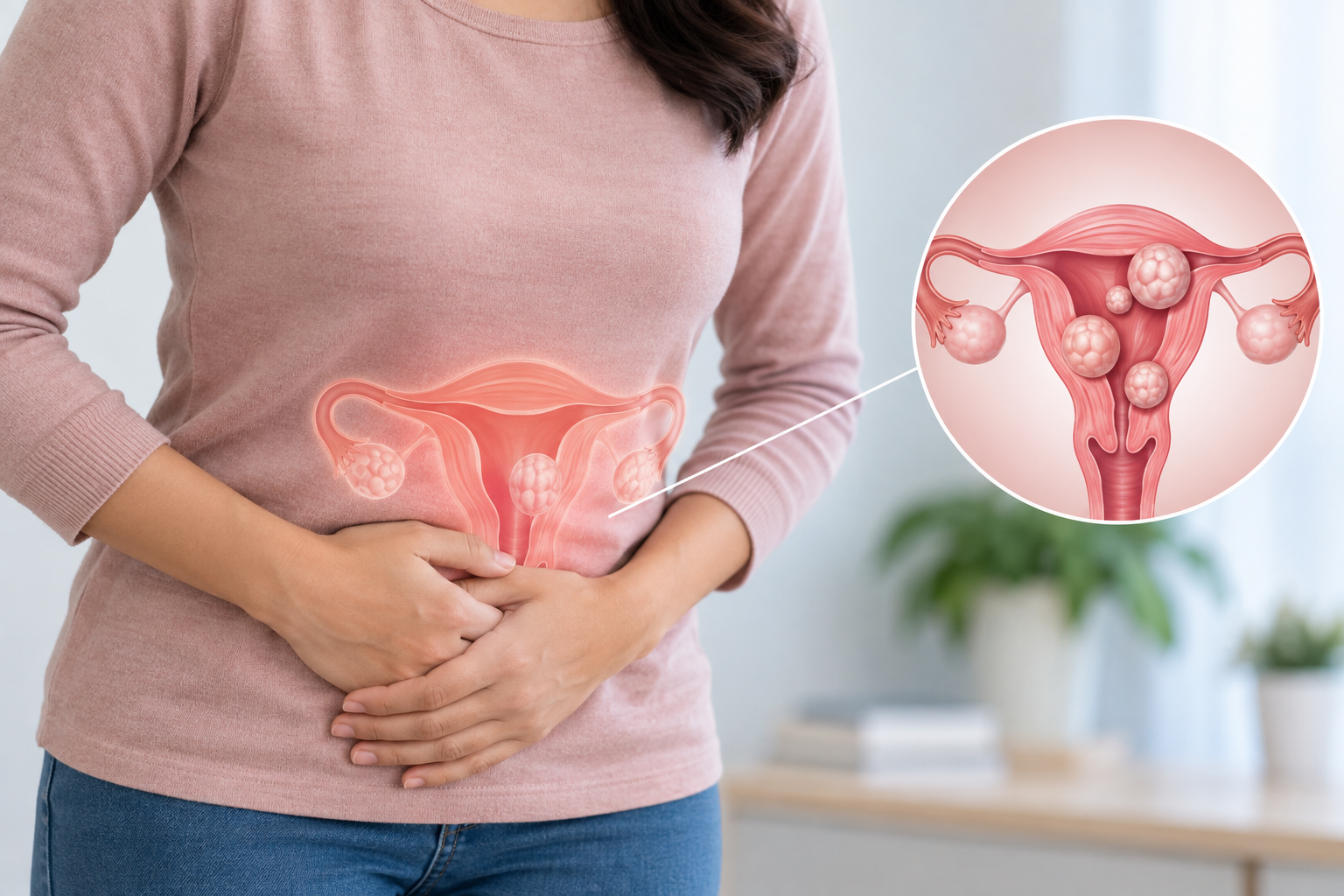
Uterine fibroids are non-cancerous growths that develop in or around the uterus. Some women have small fibroids without any symptoms, while others experience heavy periods, pelvic pressure, pain, frequent urination, or fertility problems. When looking for the best fibroids treatment in Surat, it is important to understand that no single treatment suits every woman. The appropriate approach depends on the number, size, and location of the fibroids, the severity of symptoms, age, and whether the woman wants to become pregnant in the future.
What Are Uterine Fibroids?
Fibroids, also called uterine leiomyomas, develop from the muscle and connective tissue of the uterus. They can occur as a single growth or as multiple fibroids of different sizes.
Doctors generally describe fibroids according to their location.
Intramural fibroids develop within the muscular wall of the uterus.
Submucosal fibroids grow toward or into the uterine cavity.
Subserosal fibroids develop toward the outside of the uterus.
Pedunculated fibroids grow on a stalk attached to the uterus.
The location can matter as much as the size, particularly when doctors assess heavy menstrual bleeding or fertility problems.
What Symptoms Can Fibroids Cause?
Many women have fibroids without knowing about them because they experience no noticeable symptoms.
When symptoms occur, they may include:
- Heavy or prolonged menstrual bleeding
- Pelvic pressure or fullness
- Painful periods
- Lower abdominal discomfort
- Frequent urination
- Constipation
- Back or pelvic pain
- Anaemia due to heavy menstrual bleeding
- Difficulty conceiving in selected cases
Symptoms alone cannot confirm fibroids. A gynaecological evaluation helps determine the cause.
How Do Doctors Diagnose Fibroids?
The evaluation usually starts with a discussion about menstrual symptoms, pain, previous pregnancies, and fertility plans.
A pelvic ultrasound can help identify the number, size and location of fibroids. Depending on the clinical situation, the doctor may recommend additional investigations.
These can include MRI, hysteroscopy or other tests when more detailed information about the uterus or uterine cavity is necessary.
Blood tests may also help check for anaemia when a woman experiences heavy menstrual bleeding.
Do All Fibroids Need Treatment?
No. Fibroids that cause no significant symptoms may not require immediate treatment.
A doctor may recommend monitoring them, particularly when they are small and do not affect the uterine cavity or quality of life.
Treatment becomes more relevant when fibroids cause significant bleeding, anaemia, persistent pain or pressure, rapid changes that require evaluation, or reproductive concerns.
The decision should focus on the woman’s symptoms and goals rather than simply the presence of a fibroid.
Medicines for Fibroid Symptoms
Medicines can help manage certain symptoms, especially heavy or painful periods. However, medication does not necessarily eliminate the fibroids.
Depending on the patient’s circumstances, treatment may include medicines that reduce menstrual bleeding, pain-relieving medication, or hormonal treatments.
Doctors may also use specific hormonal medicines temporarily in selected situations to control symptoms or reduce fibroid size before another treatment.
The choice depends on the woman’s symptoms, medical history, and pregnancy plans.
Women who want to conceive should tell their doctor before starting treatment because some medicines used for symptom control may not fit an immediate pregnancy plan.
When Is Fibroid Surgery Considered?
A doctor may discuss surgery when symptoms significantly affect everyday life, medicines do not provide adequate relief, or the fibroid’s size or location creates specific problems.
Surgical planning also depends heavily on fertility goals.
For women who want to preserve their uterus, myomectomy is an important option. During a myomectomy, the surgeon removes the fibroid while keeping the uterus.
Doctors can perform myomectomy through different approaches depending on the fibroid’s location, number, and size.
What Is Hysteroscopic Myomectomy?
Hysteroscopic surgery may suit certain fibroids that project into the uterine cavity.
During the procedure, the surgeon passes a hysteroscope through the vagina and cervix into the uterus. This approach does not require an abdominal incision.
The surgeon can then assess and remove suitable fibroid tissue from inside the uterine cavity.
Not every fibroid can undergo hysteroscopic removal. The doctor must first assess its position, size, and relationship with the uterine wall.
Laparoscopic Myomectomy for Fibroids
Doctors may consider laparoscopic myomectomy for selected fibroids within or toward the outer surface of the uterus.
The surgeon operates through small abdominal incisions using a camera and specialised instruments.
Compared with open abdominal surgery, minimally invasive surgery may offer smaller incisions and a different recovery profile in suitable patients.
However, large, numerous, or complex fibroids may require a different surgical approach. The surgeon chooses the technique after evaluating the individual case.
When Is Hysterectomy Considered?
A hysterectomy removes the uterus and provides definitive treatment for uterine fibroids because fibroids cannot recur in a uterus that has been removed.
However, pregnancy is no longer possible after hysterectomy.
For this reason, doctors generally consider the woman’s age, symptoms, previous treatments, overall health, and future reproductive wishes before discussing this option.
Women who want future pregnancy require a fertility-preserving treatment strategy whenever medically appropriate.
Fibroids and Fertility
Having fibroids does not automatically mean that a woman will experience infertility.
Many women with fibroids conceive naturally and have successful pregnancies. However, certain fibroids can interfere with fertility, particularly when they distort the uterine cavity or affect areas important for implantation.
The effect depends on factors such as:
- Fibroid location
- Fibroid size
- Number of fibroids
- Distortion of the uterine cavity
- Other causes of infertility
- Woman’s age and ovarian reserve
This is why doctors should assess the entire fertility picture rather than assuming that every fibroid causes infertility.
Should Fibroids Be Removed Before IVF?
Not every woman with fibroids needs surgery before IVF. The fertility specialist considers the size and location of the fibroids, whether they distort the uterine cavity, previous pregnancy or IVF history, age, and other fertility factors.
Certain fibroids that affect the uterine cavity may require treatment before fertility treatment. In other situations, the fertility specialist may recommend proceeding without fibroid surgery.
Women who are having difficulty conceiving can learn more about IVF treatment in Surat and how fertility specialists evaluate female and male fertility factors before developing an individualized treatment plan.
How Do Doctors Diagnose Fibroids?
The evaluation usually starts with a discussion about menstrual symptoms, pelvic pain, previous pregnancies, and future fertility plans.
A pelvic ultrasound can help identify the number, size, and location of fibroids. Depending on the clinical situation, the doctor may recommend additional investigations such as MRI or hysteroscopy.
For fibroids that affect or project into the uterine cavity, doctors may use hysteroscopy for closer assessment and, in suitable cases, treatment. Paaranu IVF provides hysteroscopy and other fertility treatments as part of its gynaecological and fertility care services.
Blood tests may also help identify anaemia in women who experience prolonged or heavy menstrual bleeding.ly monitoring or medication. Another woman with a fibroid distorting the uterine cavity and difficulty conceiving may require a different approach.
Fibroids Treatment and Fertility Care at Paaranu IVF
Women with fibroids who plan to become pregnant need an evaluation that considers both the fibroids and their overall reproductive health.
At Paaranu IVF in Surat, the fertility team can assess the size and location of fibroids along with other reproductive factors before discussing treatment options. When infertility is also present, evaluation may consider ovarian reserve, ovulation, the fallopian tubes, and male fertility factors where appropriate.
Fertility care at Paaranu IVF is led by Dr. Jayesh Patel, IVF Doctor in Surat, MD, D.G.O., Clinical Director, who has more than 25 years of experience in gynecology, fertility, and fetal medicine.
This combined approach helps determine whether a patient needs fibroid treatment before trying to conceive naturally or proceeding with fertility treatment.
Frequently Asked Questions
Can fibroids disappear without surgery?
Fibroids can change in size over time, but they do not always disappear. Women without significant symptoms may only require monitoring rather than surgery.
Which fibroids affect fertility the most?
Fibroids that distort the uterine cavity, particularly certain submucosal fibroids, can have a greater impact on fertility. However, doctors assess each case individually.
Can I become pregnant after fibroid surgery?
Many women can become pregnant after fertility-preserving fibroid surgery. The outcome depends on age, fertility status, the fibroids, and the type of surgery performed.
Do all large fibroids need surgery?
No. Size is only one consideration. Symptoms, location, growth pattern, fertility plans, and other clinical factors also influence the treatment decision.
Can fibroids return after myomectomy?
Yes. Myomectomy removes existing fibroids but does not prevent new fibroids from developing later.
Is IVF necessary if I have fibroids?
Not necessarily. Many women with fibroids can conceive naturally. IVF may become relevant when other fertility factors exist or when a fertility specialist recommends assisted reproduction after evaluation.
Conclusion
There is no single best fibroids treatment in Surat for every patient. Some women need only regular monitoring, while others may benefit from medicines, hysteroscopic treatment, laparoscopic or open myomectomy, or other surgical options.
For women planning pregnancy, fertility goals play an especially important role in treatment selection. A careful assessment of fibroid size, number, and location, together with age and other fertility factors, can help determine whether treatment is necessary before trying to conceive or starting fertility treatment.
At Paaranu IVF, women with fibroids and fertility concerns can undergo an individualized evaluation to understand how fibroids may affect their reproductive plans and which treatment approach may be appropriate for their situation.