Low sperm count can make natural fertilization more difficult, but it does not necessarily mean pregnancy is impossible. For some couples with male-factor infertility, ICSI treatment in Surat may provide an assisted reproductive option when conventional fertilization becomes difficult.
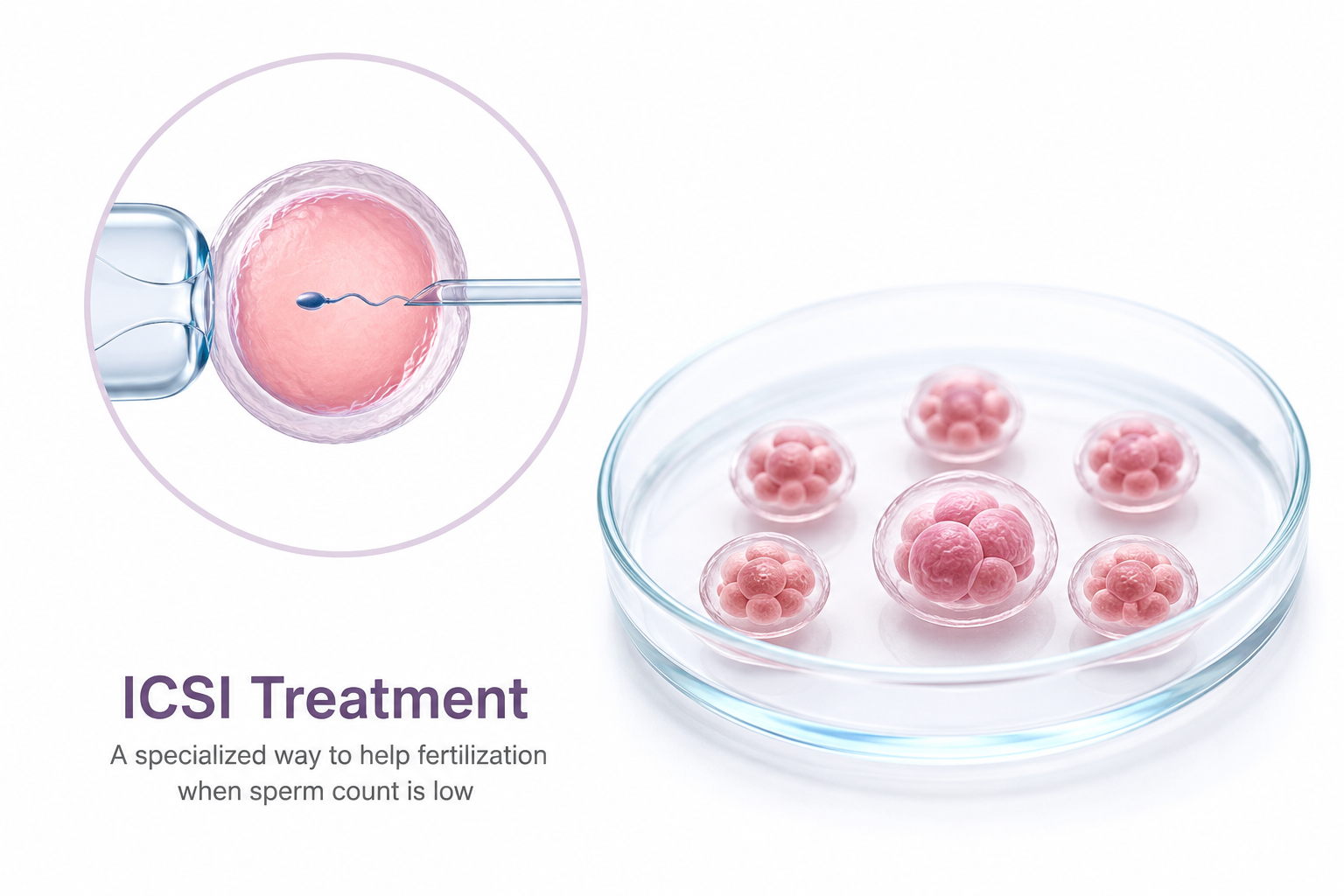
ICSI, or Intracytoplasmic Sperm Injection, is a specialized technique used as part of IVF. During ICSI, an embryologist selects a sperm and injects it directly into a mature egg to assist fertilization.
Can ICSI Help With Low Sperm Count?
Yes, ICSI may help selected couples when low sperm count affects the chances of fertilization.
In conventional IVF, sperm and eggs remain together in the laboratory so fertilization can occur. With ICSI, an embryologist introduces a selected sperm directly into a mature egg.
However, ICSI cannot guarantee fertilization, embryo development, implantation, or pregnancy. A fertility specialist should evaluate both partners before recommending treatment.
What Is ICSI Treatment?
ICSI is not a completely separate treatment from IVF. It is a laboratory fertilization technique performed during an IVF cycle.
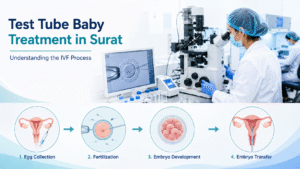
The overall treatment may involve ovarian stimulation, monitoring, egg retrieval, sperm collection or retrieval, ICSI, embryo development, and embryo transfer.
The main difference between conventional IVF and ICSI lies in the fertilization process.
| Factor | Conventional IVF | ICSI |
|---|---|---|
| Egg retrieval | Required | Required |
| Sperm sample | Required | Required |
| Fertilization | Sperm and eggs interact in the laboratory | A selected sperm is injected into an egg |
| Often considered for | Various fertility problems | Male-factor or fertilization concerns |
| Guarantees pregnancy? | No | No |
Why Does Low Sperm Count Affect Fertility?
For natural fertilization, sperm must reach and successfully fertilize an egg. When the semen contains fewer sperm than expected, the chance of this process occurring may decrease.
However, sperm count represents only one aspect of male fertility. Doctors may also evaluate sperm motility, morphology, medical history, and other relevant factors.
A semen analysis and fertility evaluation can therefore help doctors understand whether ICSI deserves consideration.
When Might Doctors Recommend ICSI?
A fertility specialist may consider ICSI when conventional fertilization could be difficult. Situations may include:
- Low sperm count
- Reduced sperm motility
- Certain sperm morphology concerns
- Limited numbers of usable sperm
- Surgically retrieved sperm
- Previous poor or failed fertilization with conventional IVF
One abnormal semen parameter does not automatically mean that a couple needs ICSI. Doctors should consider the complete fertility picture.
What Happens During an ICSI Cycle?
The process starts with a fertility evaluation of both partners. The woman then receives ovarian stimulation medicines according to her treatment plan.
After monitoring, the fertility team retrieves the eggs and prepares the sperm sample. In the laboratory, an embryologist injects a selected sperm directly into a mature egg.
The laboratory then monitors fertilization and embryo development. When appropriate, the fertility team proceeds with embryo transfer according to the individualized treatment strategy.
What Determines ICSI Success?
ICSI assists the fertilization stage, but several other biological factors influence the overall outcome.
These may include female age, egg quality, sperm factors, embryo development, underlying infertility conditions, uterine factors, and individual response to treatment.
Therefore, two couples undergoing similar ICSI procedures may experience different results.
How Much Does ICSI Treatment Cost in Surat?
The cost of ICSI treatment in Surat can vary according to individual treatment requirements.
Expenses may include fertility investigations, medicines, monitoring, IVF procedures, laboratory services, ICSI, embryo-related services, and additional procedures when clinically necessary.
Instead of comparing clinics only by package price, couples should request a clear cost breakdown after their fertility evaluation.
ICSI Treatment in Surat at Paaranu IVF
For couples exploring ICSI treatment in Surat, Paaranu IVF provides fertility evaluation and assisted reproductive services for male and female infertility.
The clinic offers fertility services including IVF, IUI, ICSI, IMSI, assisted hatching, cryopreservation, genetics, and reproductive health evaluation.
Dr. Jayesh Patel, MD, D.G.O., Clinical Director, has more than 25 years of expertise in fertility and fetal medicine.
An individualized fertility evaluation can help determine whether ICSI is appropriate for low sperm count or whether another fertility treatment may better suit the couple. If you have concerns about male infertility or want to understand whether ICSI is suitable for you, consult the fertility team for a personalized evaluation and treatment discussion.
Conclusion
ICSI treatment in Surat can help selected couples when low sperm count or other male fertility factors make fertilization difficult. By introducing a selected sperm directly into a mature egg, ICSI assists an important stage of IVF. However, treatment outcomes also depend on factors such as age, egg quality, embryo development, and the underlying cause of infertility. If you are considering ICSI, contact Paaranu IVF to schedule a fertility consultation and discuss the most appropriate treatment option for your individual needs.
Frequently Asked Questions
ICSI may allow assisted fertilization when only a limited number of suitable sperm are available. Whether treatment is possible and appropriate depends on the individual fertility evaluation.
ICSI is performed within IVF and differs mainly in how fertilization occurs. Doctors may prefer it in certain male-factor infertility cases, but it is not automatically better for every couple.
No. ICSI assists fertilization but cannot guarantee embryo development, implantation, pregnancy, or a live birth.
Male-factor infertility is an important reason doctors may consider ICSI, but fertility specialists may recommend it in some other situations, including certain previous fertilization problems.
Yes. Even when semen analysis identifies a male fertility concern, evaluating relevant fertility factors in both partners helps doctors develop a more appropriate treatment plan.