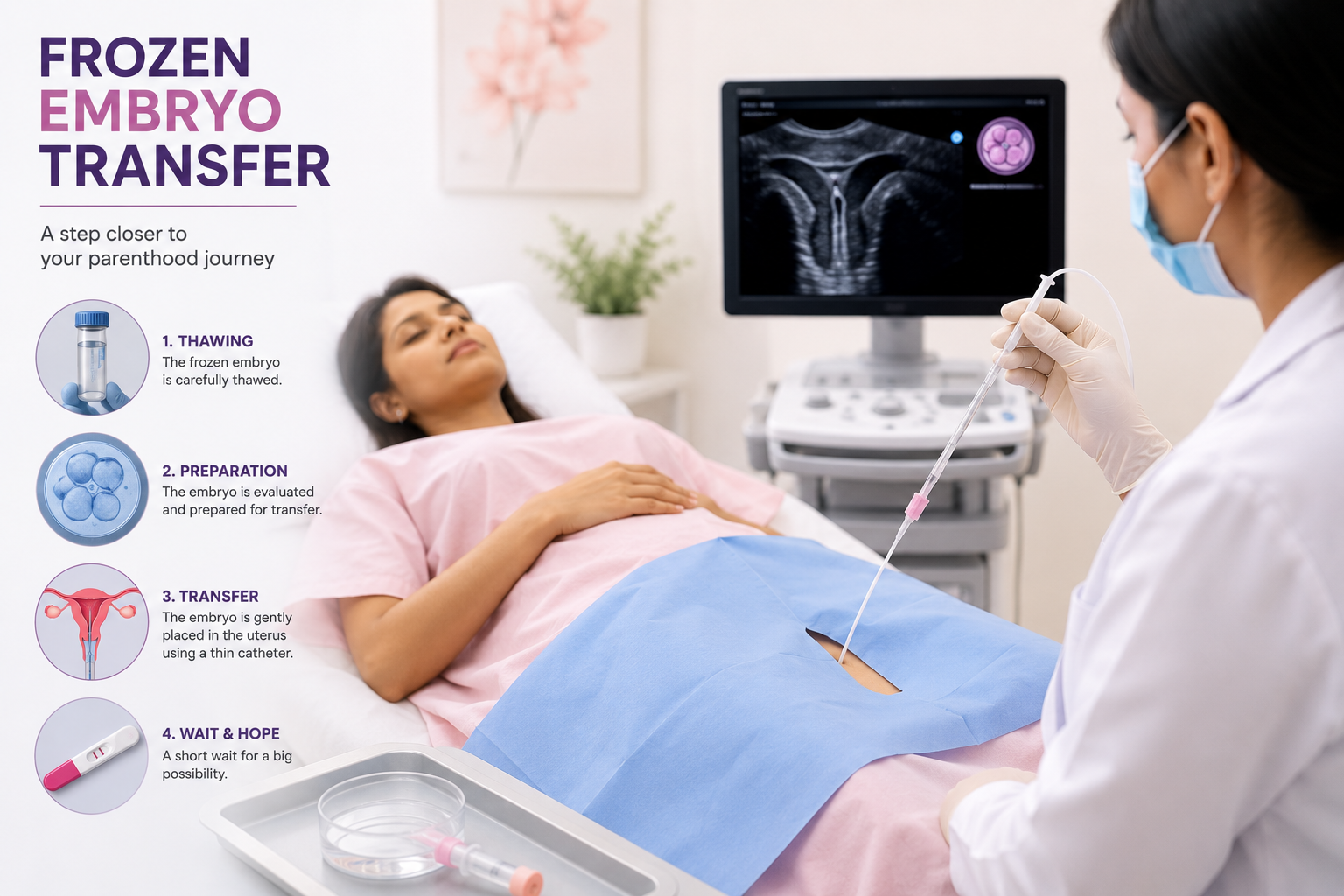
A frozen embryo transfer doctor in Surat is a fertility specialist who thaws a previously frozen embryo and places it in the uterus at the right time in your cycle. This treatment, known as frozen embryo transfer or FET, lets couples use embryos stored from an earlier IVF cycle. At Paaranu IVF, our team plans each transfer around your body, so timing and preparation match your natural or medicated cycle carefully.
Key Takeaways
- Frozen embryo transfer, or FET, places a thawed, stored embryo into the uterus during a carefully timed cycle.
- FET lets you use embryos from a past IVF cycle without repeating full ovarian stimulation.
- A good frozen embryo transfer doctor in Surat focuses on lining readiness, embryo quality, and precise timing.
- The procedure itself is quick and usually painless, and it needs no major recovery time.
- Success depends on many personal factors, so a specialist gives realistic guidance after assessing you.
Table of Contents
- What does a frozen embryo transfer doctor in Surat do?
- How does frozen embryo transfer work?
- Frozen versus fresh embryo transfer
- Who is frozen embryo transfer suitable for?
- How do you prepare for a frozen embryo transfer?
- Frequently Asked Questions
What does a frozen embryo transfer doctor in Surat do?
A frozen embryo transfer doctor in Surat prepares your uterus, thaws a stored embryo, and transfers it at the ideal moment. The specialist also tracks your hormone levels and lining thickness. In short, the doctor manages every step so the embryo meets a receptive womb.
This care builds on your earlier IVF work. During IVF, extra good quality embryos are often frozen using a fast method called vitrification. Later, a frozen embryo transfer uses one of these embryos without another egg collection. You can learn more about the wider process on our IVF treatment page, and about safe freezing on our cryopreservation page.
How does frozen embryo transfer work?
Frozen embryo transfer works by preparing the uterine lining, thawing the embryo, and placing it through a thin catheter into the uterus. The transfer takes only a few minutes and needs no anaesthesia in most cases. Afterwards, you rest briefly and then continue your day gently.
Broadly, the journey moves through a few clear stages:
- Your doctor prepares the lining with a natural cycle or with hormone support, depending on your body.
- Scans and, when needed, blood tests confirm the lining is thick and ready.
- The embryology team thaws the chosen embryo and checks that it survived well.
- The doctor transfers the embryo, and a pregnancy test follows about two weeks later.
Because good embryos often reach the blastocyst stage before freezing, many transfers use a blastocyst. Our blastocyst culture and transfer page explains that stage in more detail.
Frozen versus fresh embryo transfer
Frozen and fresh transfers both aim for a healthy pregnancy, yet they differ in timing and preparation. A fresh transfer happens in the same cycle as egg collection. A frozen transfer happens later, which gives the body time to recover from stimulation first.
The table below compares the two at a glance:
| Feature | Fresh transfer | Frozen transfer (FET) |
|---|---|---|
| Timing | Same cycle as egg collection | A later, separate cycle |
| Body recovery | Less time to recover | More time after stimulation |
| Lining control | Harder to fine tune | Easier to prepare and time |
| Extra embryos | Frozen for future use | Uses an already stored embryo |
Neither option is best for everyone. Instead, the right choice depends on your hormones, your embryos, and your health. According to the World Health Organization, infertility affects millions of people worldwide, so personalised planning truly matters.
Who is frozen embryo transfer suitable for?
Frozen embryo transfer suits people who have good quality embryos stored from an earlier IVF cycle. It also helps when a fresh transfer must be delayed for medical reasons. Therefore, your doctor recommends FET only after reviewing your embryos and your health.
This approach can be a strong fit in several situations. For instance, some patients need time to let hormone levels settle after stimulation. Others plan a transfer around genetic testing of embryos. Many simply return for a sibling from embryos frozen years earlier. To discuss your own case, you can meet our IVF specialist in Surat.
How do you prepare for a frozen embryo transfer?
You prepare for a frozen embryo transfer by following your medication plan, attending scans, and keeping a steady, healthy routine. Your doctor guides the exact timing. Meanwhile, simple habits like balanced meals, gentle activity, and good sleep support the process well.
A few practical points help most patients feel ready:
- Take prescribed medicines exactly as advised, since timing controls the lining.
- Avoid smoking and limit stress where you can, because both affect general health.
- Attend every scan, as these confirm the best day for transfer.
- Ask questions early, so you feel calm and informed on the day.
When you are ready to begin, our team makes booking simple. You can request a visit through the appointment page and we will guide the next steps.
Frequently Asked Questions
Is frozen embryo transfer painful?
Frozen embryo transfer is usually painless and feels similar to a routine internal scan. The doctor passes a thin, soft catheter through the cervix. Most patients feel only mild pressure and go home shortly after the short procedure.
How long does a frozen embryo transfer take?
The transfer itself takes only a few minutes. The full appointment, including preparation and a short rest, is usually under an hour. Your wider cycle of medication and scans runs across a few weeks before the day.
Is frozen embryo transfer as successful as fresh transfer?
Frozen embryo transfer can be as successful as fresh transfer, and sometimes it suits the body better. Success depends on embryo quality, lining readiness, and personal factors. Your specialist gives realistic guidance after reviewing your case.
How many embryos are transferred during FET?
Often a single good embryo is transferred to lower the risk of twins. The exact number depends on your age, embryo quality, and history. Your doctor discusses a safe, personalised plan with you beforehand.
When can I take a pregnancy test after frozen embryo transfer?
Most clinics advise a blood pregnancy test about two weeks after the transfer. Testing too early can give a misleading result. Your Paaranu IVF team tells you the exact date for an accurate answer.
Do I need bed rest after a frozen embryo transfer?
Strict bed rest is not needed after a frozen embryo transfer. Gentle daily activity is usually fine and even helpful. Your doctor will share simple, personalised advice so you feel confident during the waiting period.
How long can embryos stay frozen before transfer?
Embryos can remain safely frozen for many years using modern vitrification. Quality is well preserved when storage follows proper standards. Your doctor confirms the condition of your embryos before planning the transfer.
If you have embryos stored and want a caring, experienced team to guide your transfer, we are here for you. Book a consultation at Paaranu IVF Clinic in Surat. Call +91 98797 72259 or email care@paaranuivf.com, or request a visit on our appointment page.
About Paaranu IVF
Paaranu IVF, part of Paaranu Women’s Superspecialities, is a dedicated IVF, fertility and women’s superspeciality centre in Surat, Gujarat. The clinic offers IVF, IUI, ICSI, IMSI, blastocyst culture and transfer, assisted hatching, cryopreservation, male infertility care, fetal medicine and gynaecology. It serves Surat, Adajan, Vesu, Rander and across South Gujarat, and welcomes patients travelling from abroad.