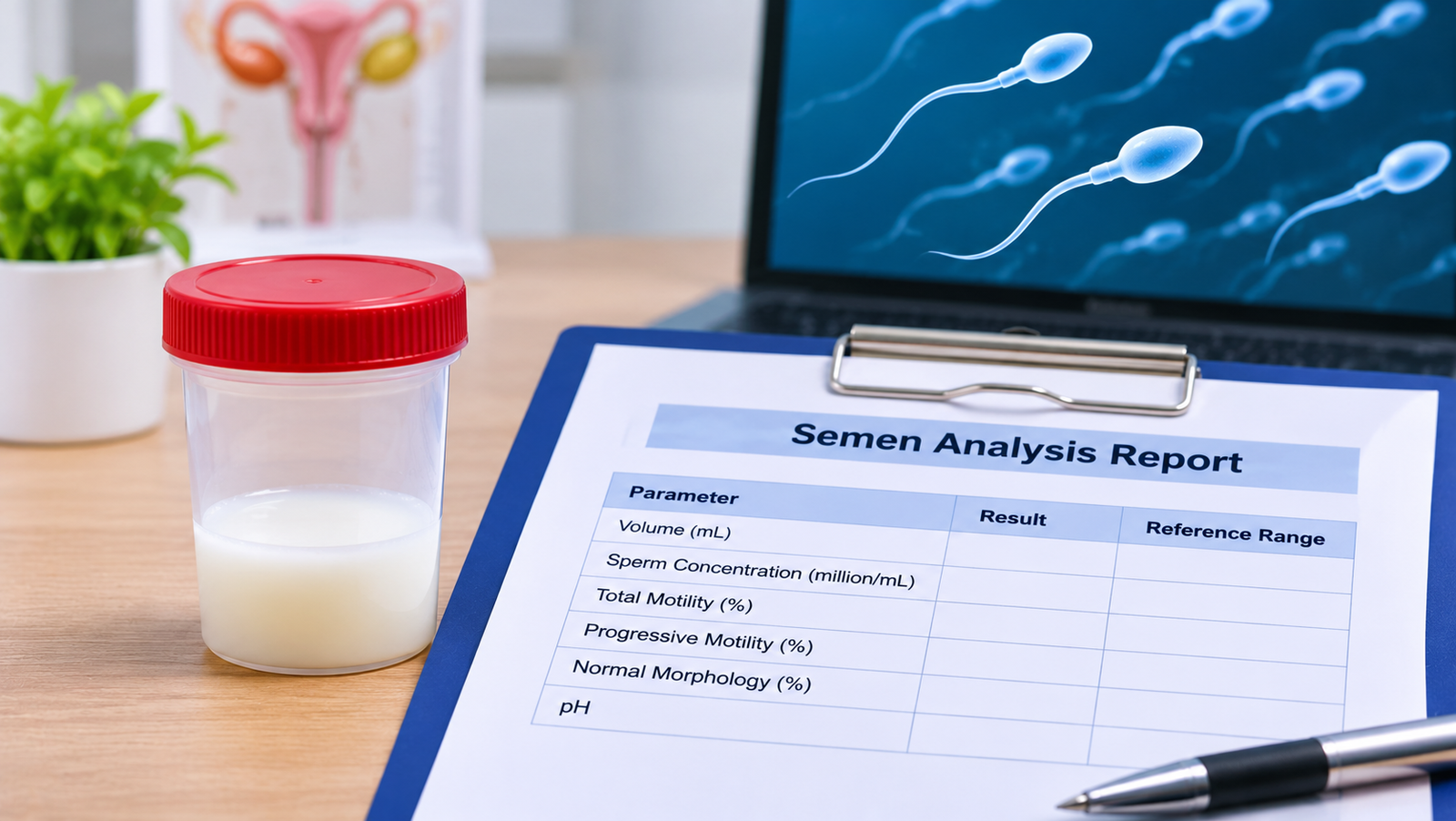
A semen analysis test in Surat evaluates sperm count, movement (motility), shape (morphology) and semen volume. WHO 2021 lower reference limits include sperm concentration of 16 million per ml and progressive motility of 30%. Sample collection requires an appropriate abstinence period and following the laboratory’s preparation instructions.
Male fertility plays an important role in a couple’s ability to conceive. However, sperm-related fertility problems may not produce noticeable symptoms. A semen analysis helps identify potential concerns and guides further investigations.
At Paaranu IVF, Dr. Jayesh Patel (MD, DGO, 25+ years of experience) helps patients understand their semen analysis results and explore suitable fertility treatment options based on their individual findings.
How Should You Prepare for a Sperm Test Near Ring Road Surat?
Proper preparation is important because several factors can influence semen analysis results. Following laboratory instructions helps improve the reliability of the report.
Maintain the recommended abstinence period
WHO generally recommends avoiding ejaculation for two to seven days before sample collection. Paaranu IVF may recommend [two to five days, subject to clinic confirmation].
An excessively short or long abstinence period may influence sperm concentration, semen volume and motility.
Inform your doctor about medications
Certain medications, testosterone supplements, anabolic steroids and medical treatments can affect sperm production.
Inform your fertility specialist about any prescription medicines, supplements or recent illnesses before undergoing the test. Do not discontinue prescribed medicines without medical advice.
Follow sample collection instructions
The sample is usually collected through masturbation into a sterile laboratory-provided container.
Patients should avoid using ordinary lubricants or condoms because some products may affect sperm quality.
Collecting the complete sample is important, particularly the initial portion, which may contain a higher concentration of sperm.
Consider recent health conditions
High fever, infections and certain medical conditions can temporarily affect sperm production. Inform the laboratory if you have recently experienced an illness.
Before booking a semen analysis test in Surat, confirm the preparation requirements, collection arrangements and reporting process with the clinic.
What Does Each Value in a Semen Analysis Report Mean?
A semen analysis measures several characteristics of semen and sperm. Each parameter provides different information about male reproductive health.
Semen volume
Semen volume refers to the total amount of fluid released during ejaculation.
Low semen volume may result from incomplete sample collection, ejaculation difficulties or certain reproductive tract conditions.
Sperm concentration
Sperm concentration measures the number of sperm present in each millilitre of semen.
A lower concentration is known as oligozoospermia and may reduce the likelihood of natural conception.
Total sperm count
Total sperm count represents the estimated number of sperm in the entire ejaculate.
It is calculated using semen volume and sperm concentration.
Sperm motility
Motility measures the ability of sperm to move. Progressive motility specifically describes sperm moving forward effectively.
Reduced motility may make it more difficult for sperm to reach and fertilise an egg.
Sperm morphology
Morphology evaluates sperm shape and structure, including the head, midpiece and tail.
A lower percentage of normally shaped sperm does not automatically mean that natural conception is impossible.
Sperm vitality
Vitality measures the percentage of living sperm in the sample. This parameter can be particularly useful when sperm motility is low.
A fertility specialist interprets these findings together rather than relying on a single measurement.
What Are the WHO Normal Ranges for Semen Analysis?
The World Health Organization published updated semen analysis reference values in its sixth-edition laboratory manual in 2021.
Understanding these values can help patients interpret their reports before discussing the findings with a fertility specialist.
WHO 2021 semen test normal range
| Parameter | WHO lower reference limit | What a low value may indicate |
|---|---|---|
| Semen volume | 1.4 ml | Collection or reproductive tract concerns |
| Sperm concentration | 16 million/ml | Low sperm concentration |
| Total sperm count | 39 million/ejaculate | Reduced total sperm number |
| Total motility | 42% | Reduced overall sperm movement |
| Progressive motility | 30% | Reduced forward sperm movement |
| Normal morphology | 4% | Lower proportion of normally shaped sperm |
| Sperm vitality | 54% | Reduced proportion of living sperm |
These values represent lower reference limits derived from a fertile reference population. They are not absolute boundaries between fertility and infertility.
A result below the reference limit does not necessarily mean that a man cannot father a child. Similarly, results above these limits do not guarantee pregnancy.
Patients undergoing a semen analysis test in Surat should discuss their complete report with a specialist to understand its clinical significance.
What Should You Do If Your Semen Analysis Report Is Abnormal?
Receiving an abnormal semen analysis report can be concerning. However, sperm parameters can fluctuate, and a single abnormal result may not establish a permanent fertility problem.
The next step is identifying possible underlying causes.
Common factors associated with abnormal semen parameters include:
- Hormonal imbalances.
- Varicocele.
- Smoking and excessive alcohol consumption.
- Obesity and metabolic conditions.
- Recent fever or infection.
- Certain medications and anabolic steroids.
- Reproductive tract obstruction.
- Genetic conditions.
A fertility specialist may recommend a repeat semen analysis, physical examination, hormone tests or ultrasound investigations, depending on the initial findings.
Patients can explore male infertility treatment in Surat to understand available diagnostic and treatment approaches.
Consulting a male infertility specialist can help determine whether lifestyle modifications, medical treatment, surgery or assisted reproductive techniques may be appropriate.
If no sperm are detected in the semen sample, the condition is known as azoospermia. Additional investigations are required to distinguish between sperm production problems and reproductive tract obstruction.
An azoospermia doctor can assess the condition and discuss potential fertility options.
When Should You Repeat a Semen Analysis Test?
Sperm production and semen quality can vary over time. Repeat testing may help determine whether abnormal findings are temporary or persistent.
A semen analysis test in Surat may need to be repeated in the following situations:
- The initial report shows abnormal sperm parameters.
- The sample was incomplete or improperly collected.
- The patient recently experienced fever or illness.
- Fertility treatment has been initiated.
- The specialist needs to assess changes following lifestyle modifications.
Sperm development takes approximately two to three months. Therefore, repeat testing after treatment or lifestyle changes may be scheduled around this period.
However, earlier testing may be appropriate in certain clinical situations, particularly when very low sperm counts or azoospermia are identified.
At Paaranu IVF, Dr. Jayesh Patel can recommend an appropriate testing schedule based on the initial semen analysis report and the couple’s fertility assessment.
Frequently Asked Questions
One abnormal semen analysis report does not necessarily indicate permanent infertility. Sperm parameters can fluctuate due to illness, medications, lifestyle factors and sample collection conditions. A fertility specialist may recommend repeat testing and additional investigations before diagnosing male infertility or recommending appropriate treatment.
Semen analysis reporting time depends on the laboratory’s testing procedures and whether additional investigations are required. Patients booking a sperm test near Ring Road Surat should confirm the expected reporting time with Paaranu IVF.
Prolonged psychological stress may contribute to hormonal changes, unhealthy lifestyle habits and reduced reproductive health. However, stress is not the only possible cause of low sperm count. Persistent abnormalities require a comprehensive fertility assessment to identify medical, hormonal, environmental or lifestyle-related factors.
Sperm DNA fragmentation testing evaluates damage to the genetic material within sperm. It may be considered in selected cases involving recurrent pregnancy loss, unexplained infertility or unsuccessful fertility treatments. Unlike routine semen analysis, this specialised investigation assesses sperm DNA integrity rather than conventional sperm parameters.
Conclusion
A semen analysis test in Surat is an important initial investigation for identifying potential male fertility concerns. Understanding sperm concentration, motility, morphology and WHO reference values helps patients make informed decisions about further evaluation.
Dr. Jayesh Patel at Paaranu IVF provides personalised fertility assessments to help couples understand their results and explore appropriate treatment options.