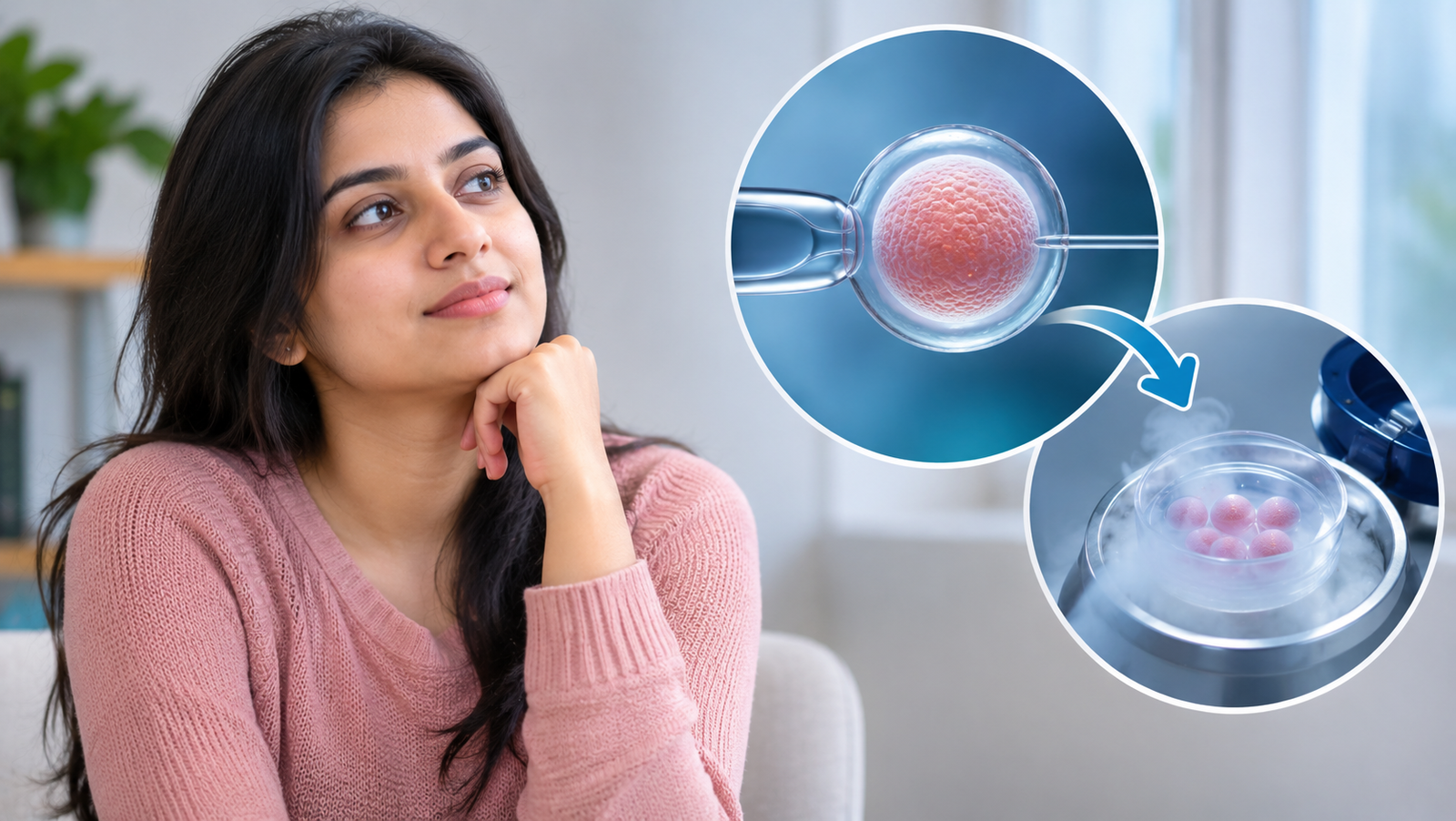
Egg freezing (oocyte freezing) allows women to store eggs for a future pregnancy. Egg freezing in Surat is generally more beneficial before age 35, when egg quantity and quality tend to be higher. The process involves approximately [two weeks] of ovarian stimulation, egg collection under sedation and vitrification in a specialised laboratory.
Pregnancy planning is a personal decision influenced by career goals, relationships, medical conditions and financial circumstances. However, female fertility naturally declines with age, making fertility preservation worth considering for some women.
At Paaranu IVF, Dr. Jayesh Patel (MD, DGO, 25+ years of experience) provides personalised fertility assessments to help women understand their ovarian reserve, treatment options and realistic expectations before proceeding.
Who Should Consider Egg Freezing for Working Women in Surat?
Egg freezing may be suitable for women who want to preserve their reproductive options but are not ready to become pregnant.
Women who may consider this procedure include:
- Working professionals who wish to delay pregnancy.
- Women who have not yet found a suitable partner.
- Women planning higher education or career development.
- Women with a family history of early menopause.
- Patients preparing for treatments that may affect fertility.
- Women with certain ovarian conditions.
- Women considering fertility preservation before ovarian surgery.
Social egg freezing refers to preserving eggs for personal rather than immediate medical reasons. It provides reproductive flexibility but does not guarantee a future pregnancy.
Women considering egg freezing in Surat should undergo a fertility assessment before deciding whether the procedure is appropriate.
Tests may include anti-Müllerian hormone (AMH), antral follicle count (AFC) and relevant blood investigations. These help estimate ovarian response and the potential number of eggs that may be collected.
What Is the Best Age and How Many Eggs Should You Freeze?
Age at the time of egg collection is an important factor influencing future pregnancy outcomes.
Women generally have a higher proportion of healthy eggs during their twenties and early thirties. As age increases, both egg quantity and quality tend to decline.
Freezing eggs at a younger age may improve the likelihood of obtaining usable eggs. However, the ideal timing depends on individual circumstances, reproductive goals and ovarian reserve.
Egg freezing age and expected outcomes
| Age group | Eggs usually advised | Expected chance of future live birth |
|---|---|---|
| Below 30 years | [Doctor-approved number] | Generally more favourable |
| 30–34 years | [Doctor-approved number] | Relatively favourable |
| 35–37 years | [Doctor-approved number] | Gradually declining |
| 38–40 years | [Doctor-approved number] | Lower; individual assessment needed |
| Above 40 years | [Doctor-approved number] | Generally lower and more variable |
Some women may need more than one stimulation cycle to collect an appropriate number of mature eggs.
Women planning pregnancy at an older age can also learn about IVF after 35 and the factors influencing treatment outcomes.
What Is the Step-by-Step Egg Freezing Process?
Understanding the treatment process can help women prepare physically, emotionally and financially.
Egg freezing in Surat generally involves the following stages.
1. Initial fertility consultation
The fertility specialist reviews medical history, menstrual patterns, previous treatments and future pregnancy plans.
Blood tests and ultrasound examinations help assess ovarian reserve.
2. Ovarian stimulation
Hormonal injections stimulate the ovaries to develop multiple follicles during a treatment cycle.
The stimulation period generally lasts [10–14 days], depending on ovarian response.
3. Follicular monitoring
Regular ultrasound scans and blood tests help monitor follicle development. Medication doses may be adjusted according to the findings.
4. Trigger injection
When the follicles reach an appropriate stage, a trigger injection is administered to support final egg maturation.
5. Egg retrieval
Eggs are collected through an ultrasound-guided procedure, usually performed under sedation.
Patients may experience temporary bloating, mild cramps or discomfort afterwards.
6. Vitrification and storage
Mature eggs are rapidly frozen using vitrification, which helps minimise ice crystal formation.
The eggs are stored in specialised cryogenic tanks at controlled temperatures.
Patients can learn more about the laboratory and storage process through the cryopreservation centre in Surat.
What Are Egg Freezing Success Rates by Age?
The success of egg freezing depends on several biological and laboratory factors. Age at freezing is particularly important because eggs retain characteristics associated with the age at which they were collected.
Other factors influencing outcomes include:
- Number of mature eggs frozen.
- Egg survival after warming.
- Fertilisation and embryo development.
- Laboratory quality and vitrification techniques.
- Sperm quality during future fertilisation.
- Uterine health and overall medical condition.
Not every frozen egg survives warming, fertilises successfully or develops into a suitable embryo. Therefore, egg freezing should be considered a fertility preservation option rather than pregnancy insurance.
Before choosing egg freezing in Surat, patients should request an individualised estimate of their reproductive prospects and understand the limitations.
Financial planning is equally important. Expenses may include fertility tests, stimulation medicines, egg retrieval, freezing, annual storage and future IVF treatment.
Read more about egg freezing cost in India to understand the different cost components.
Can Egg Freezing Help Before Cancer Treatment or With Endometriosis?
Egg freezing is not limited to women delaying pregnancy for personal reasons. It may also be recommended for certain medical conditions.
Cancer treatment
Chemotherapy, radiotherapy and some cancer surgeries may affect ovarian function.
Fertility preservation should be discussed with the oncology team before treatment begins whenever medically feasible. Cancer treatment should not be delayed without approval from the treating oncologist.
Endometriosis
Endometriosis, particularly ovarian endometriosis, may affect ovarian reserve. Some ovarian surgeries may further reduce the number of available eggs.
Egg freezing may be considered before surgery in selected patients, depending on disease severity, age and reproductive plans.
Other medical reasons
Women with conditions associated with premature ovarian insufficiency or those preparing for potentially fertility-damaging treatments may also benefit from early counselling.
At Paaranu IVF, egg freezing in Surat can be discussed through an individualised consultation that considers medical history, fertility goals, treatment risks and available alternatives.
Frequently Asked Questions
Eggs can remain cryopreserved for extended periods when stored under appropriate laboratory conditions. The permitted storage duration depends on applicable Indian ART regulations, consent requirements and clinic policies. Patients should discuss storage renewal, annual charges and future egg utilisation before beginning treatment.
Egg freezing may cause mild discomfort during hormonal injections and ovarian stimulation. Egg retrieval is generally performed under sedation to minimise procedural discomfort. Temporary cramps and bloating may occur afterwards. Severe pain, breathing difficulties or significant abdominal swelling require prompt medical assessment.
The recommended number depends on age, ovarian reserve and the desired number of future children. Patients considering egg freezing for working women in Surat should discuss personalised egg-number targets with a fertility specialist. Some women may require multiple stimulation cycles to reach their recommended target.
Frozen eggs may be used after age 40, subject to medical suitability and applicable ART regulations. Egg quality is largely influenced by age at freezing, but pregnancy-related risks increase with maternal age. A comprehensive medical and fertility assessment is recommended before attempting pregnancy.
Conclusion
Egg freezing in Surat offers women an opportunity to preserve reproductive options before age-related fertility decline or certain medical treatments.
Early consultation, ovarian reserve assessment and realistic expectations are important for informed decision-making. Dr. Jayesh Patel at Paaranu IVF helps patients understand the potential benefits, limitations and treatment requirements of fertility preservation.