For some couples undergoing IVF, getting a good quality embryo is only one part of the fertility journey. The embryo must also attach to the lining of the uterus, a process known as implantation. Assisted hatching in Surat is a laboratory technique that may help the embryo hatch from its outer protective layer before implantation.
So, can assisted hatching improve embryo implantation? In selected IVF cases, it may support the implantation process. However, it is not suitable or necessary for every patient, and it cannot guarantee pregnancy.
What Is Assisted Hatching?
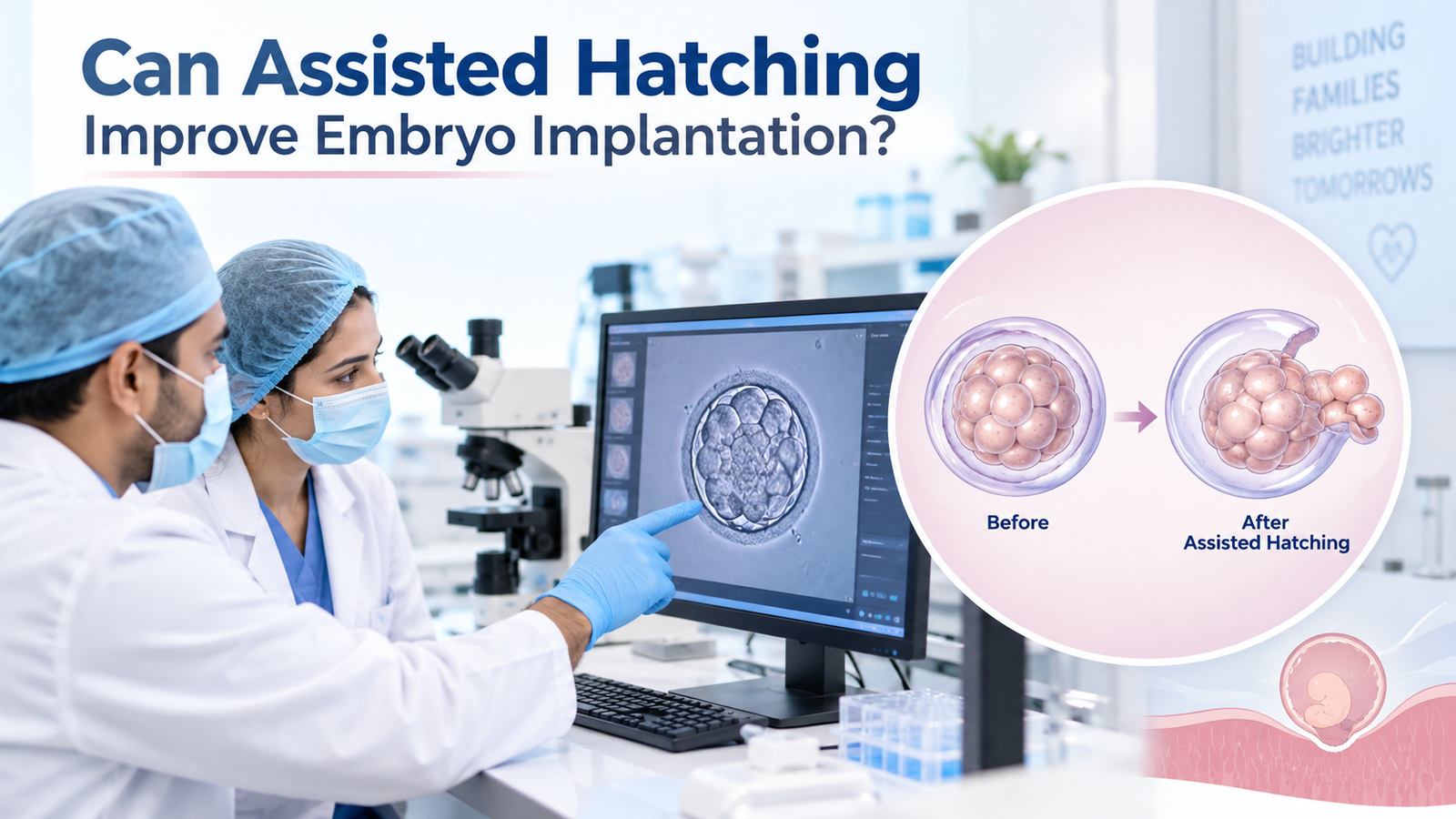
Before an embryo can implant, it needs to break out of a thin protective covering called the zona pellucida. This natural process is known as hatching.
During assisted hatching, an embryologist creates a small opening or thinning in this outer layer. The procedure is performed in the IVF laboratory using specialised techniques.
The goal is to make it easier for the embryo to hatch and potentially attach to the uterine lining.
How Could Assisted Hatching Support Implantation?
The embryo needs to hatch before it can implant. In some situations, the zona pellucida may be thicker or harder than expected. Therefore, creating a small opening may help the embryo complete the hatching process.
However, implantation depends on several factors. These include embryo quality, maternal age, uterine health, endometrial thickness, hormonal balance, and other fertility-related conditions.
Therefore, assisted hatching should be considered as one part of an overall IVF treatment plan rather than a guaranteed way to increase pregnancy rates.
Who May Be Considered for Assisted Hatching?
Not every IVF patient needs assisted hatching. A fertility specialist may consider it based on the individual’s medical and treatment history.
It may be discussed in situations such as:
- Previous IVF cycles without successful implantation
- Certain embryo characteristics
- Embryos with a thicker zona pellucida
- Some frozen embryo transfer situations
- Repeated implantation difficulties in selected patients
- Specific cases where the fertility specialist believes the technique may be appropriate
The decision should be based on individual assessment rather than using the technique routinely for everyone.
What Happens During Assisted Hatching?
Assisted hatching takes place in the IVF laboratory. The embryo is carefully observed under a microscope by an experienced embryologist.
A small opening or thinning is made in the zona pellucida using an appropriate laboratory technique. The embryo can then continue its development and may hatch through this opening.
Afterward, the embryo may be transferred into the uterus according to the planned IVF treatment schedule.
The procedure does not involve surgery on the patient. Instead, it is performed on the embryo in a controlled laboratory environment.
Does Assisted Hatching Guarantee Implantation?
No. Assisted hatching does not guarantee embryo implantation or pregnancy.
Successful implantation involves a complex interaction between the embryo and the uterine lining. Even when assisted hatching is performed, other factors can influence the outcome.
For example, embryo chromosomal health, egg quality, sperm quality, age, uterine conditions, and overall reproductive health can all affect IVF outcomes.
Therefore, your fertility specialist should explain whether assisted hatching is appropriate for your particular situation.
Is Assisted Hatching Safe?
When performed by trained IVF laboratory professionals using appropriate techniques, assisted hatching is generally considered a specialised laboratory procedure.
Because the technique involves manipulating the embryo, it should only be performed when clinically appropriate and in a properly equipped IVF laboratory.
Your fertility team can explain the potential benefits, limitations, and risks before treatment.
Choosing Assisted Hatching in Surat
If you are considering assisted hatching in Surat, start by discussing your previous fertility treatment, embryo development, and implantation history with an experienced fertility specialist.
A good fertility centre should have:
- Experienced fertility specialists
- Skilled embryologists
- Modern IVF laboratory facilities
- Individualised treatment planning
- Clear communication about benefits and limitations
- Appropriate embryo monitoring and handling
Most importantly, assisted hatching should be recommended based on your individual circumstances rather than simply because it is available.
Can Assisted Hatching Be Combined With Other IVF Treatments?
Yes. Assisted hatching may be considered as part of a broader IVF treatment plan. Depending on the patient’s needs, IVF may also involve procedures such as ICSI, embryo culture, embryo freezing, or frozen embryo transfer.
However, every treatment serves a different purpose. Your fertility specialist can determine which techniques are relevant based on your fertility evaluation and previous treatment history.
What Should You Ask Your Fertility Specialist?
Before undergoing assisted hatching, consider asking:
- Why is assisted hatching being recommended for me?
- What characteristics of my embryos make it worth considering?
- Could it improve my chances of implantation?
- Are there alternative approaches?
- What are the potential benefits and risks?
- How will my embryos be handled during the procedure?
These questions can help you understand whether the procedure fits your IVF plan.
Final Thoughts
Assisted hatching may help selected IVF patients by creating a small opening in the embryo’s outer protective layer, potentially supporting the natural hatching process before implantation. However, it is not a guaranteed method for achieving pregnancy.
If you are exploring assisted hatching in Surat, discuss your embryo quality, previous IVF outcomes, and individual fertility factors with a qualified fertility specialist. A personalised approach can help determine whether assisted hatching is appropriate for your treatment.
FAQs
1. What is assisted hatching in IVF?
Assisted hatching is a laboratory technique that creates a small opening or thinning in the embryo’s zona pellucida to help it hatch.
2. Can assisted hatching improve embryo implantation?
It may support implantation in selected IVF cases, but evidence of improved outcomes varies, and it does not guarantee pregnancy.
3. Is assisted hatching required for every IVF patient?
No. It is not routinely necessary for every patient. A fertility specialist can recommend it based on individual circumstances.
4. Is assisted hatching painful?
No. The procedure is performed on the embryo in the IVF laboratory, so the patient does not experience pain from the hatching procedure itself.
5. Is assisted hatching the same as ICSI?
No. ICSI involves injecting a sperm directly into an egg to assist fertilisation. Assisted hatching is performed later on the embryo to help it hatch from its outer layer.