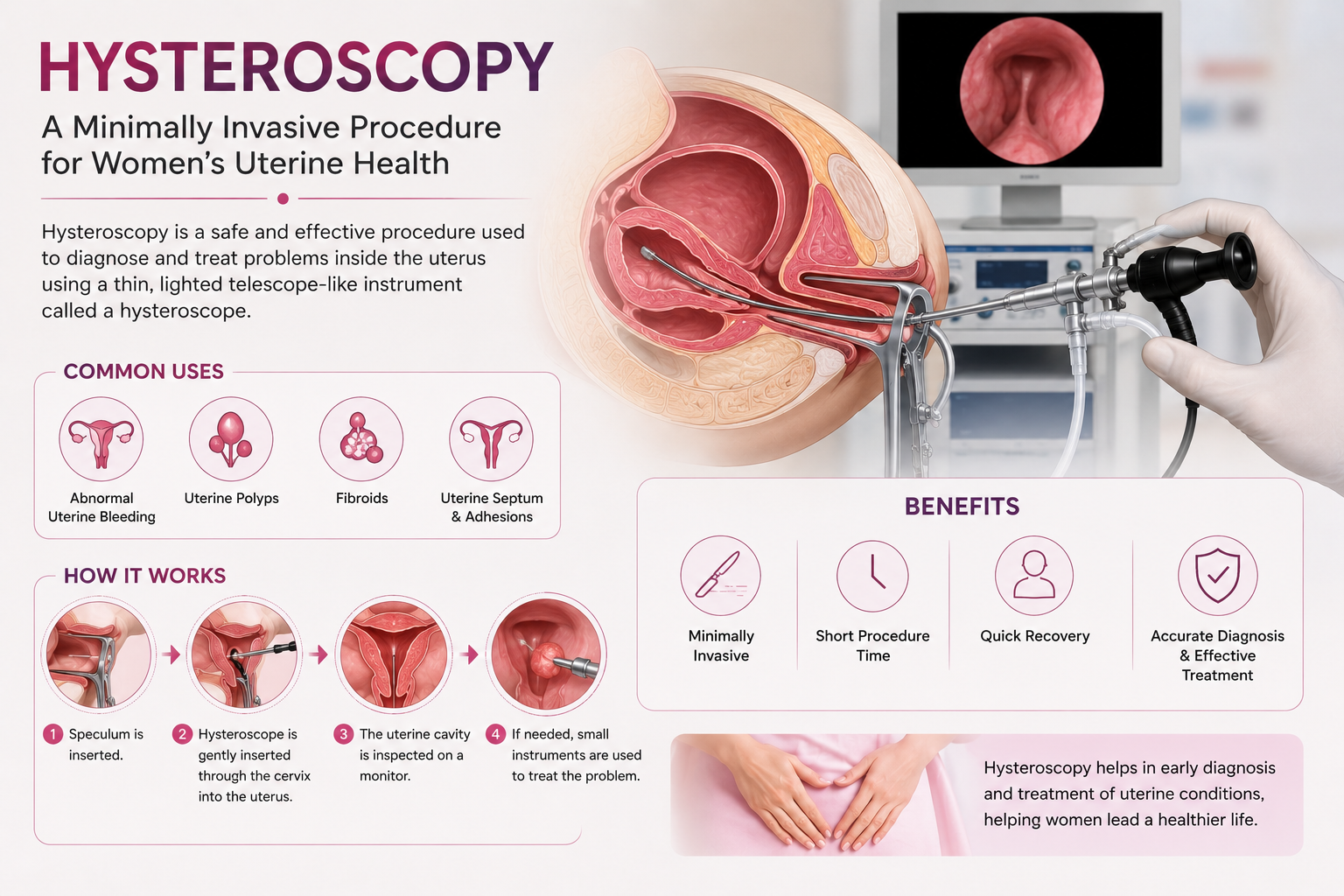
If you are searching for hysteroscopy near me, it means a doctor wants to look inside your uterus using a thin, lighted camera called a hysteroscope. The procedure helps diagnose and treat causes of heavy bleeding, fibroids, polyps and infertility. Most hysteroscopies are quick, safe and done without a large incision.
Key Takeaways
- Hysteroscopy lets your doctor see inside the uterus directly, so problems are found and often treated in one visit.
- It commonly investigates heavy periods, repeated miscarriage, fibroids, polyps and unexplained infertility.
- A diagnostic hysteroscopy is short and often needs no cut, while an operative one treats what it finds.
- Recovery is usually quick, with mild cramping or light spotting for a day or two.
- Choosing a nearby experienced clinic makes follow up and fertility care much easier.
Table of Contents
- What is hysteroscopy?
- Why would I need hysteroscopy near me?
- What are the types of hysteroscopy?
- How is a hysteroscopy done?
- What is recovery like?
- How do I choose the right clinic nearby?
- Frequently Asked Questions
What is hysteroscopy?
Hysteroscopy is a procedure that uses a slim, lighted telescope to examine the inside of the uterus. The doctor gently passes the hysteroscope through the vagina and cervix, so no external cut is needed. As a result, both diagnosis and minor treatment can happen through the same natural opening.
The camera sends a clear image to a screen. Because of this, your gynaecologist can spot fibroids, polyps, scar tissue or an unusual uterine lining in real time. When a problem is visible, small instruments can pass through the scope to correct it during the same session.
At Paaranu IVF, hysteroscopy forms part of our wider fertility and gynaecology treatments. It often clarifies why conception has been difficult, which then guides the next step in your care.
Why would I need hysteroscopy near me?
You may need hysteroscopy near you when symptoms or scans point to a problem inside the uterus. Doctors frequently recommend it for heavy or irregular bleeding, repeated miscarriage, or infertility that other tests cannot explain. Having the procedure nearby keeps your care and follow up simple.
Common reasons your doctor may suggest hysteroscopy include the situations below.
- Heavy, prolonged or irregular menstrual bleeding.
- Suspected fibroids or polyps seen on an ultrasound.
- Repeated miscarriage or difficulty conceiving.
- Scar tissue inside the uterus, known as adhesions.
- A displaced contraceptive device that needs removal.
For couples trying to conceive, a clear uterine cavity matters a great deal. Therefore, many patients have hysteroscopy before starting IVF treatment in Surat, so the uterus is ready for an embryo. If fibroids are the concern, our team also offers focused fibroids treatment.
What are the types of hysteroscopy?
There are two main types of hysteroscopy: diagnostic and operative. Diagnostic hysteroscopy only looks and confirms a problem, while operative hysteroscopy treats it in the same sitting. Your doctor decides which one you need based on your symptoms and earlier scans.
The table below compares them simply.
| Feature | Diagnostic hysteroscopy | Operative hysteroscopy |
|---|---|---|
| Purpose | To look and confirm a diagnosis | To treat fibroids, polyps or adhesions |
| Anaesthesia | Often none or mild | Usually short general or regional |
| Typical time | About 5 to 15 minutes | About 20 to 45 minutes |
| Recovery | Same day, back to routine quickly | A day or two of rest advised |
Sometimes a diagnostic look turns into treatment when a problem is found. Consequently, your doctor will discuss both possibilities with you before the procedure begins.
How is a hysteroscopy done?
A hysteroscopy is done by gently passing the hysteroscope through the cervix into the uterus, then viewing the cavity on a screen. A little fluid or gas opens the space for a clear view. The whole diagnostic process is usually brief and well tolerated.
First, you rest comfortably and any needed anaesthesia is given. Next, the doctor inserts the scope slowly and inspects the uterine lining, openings of the tubes and any growths. Finally, if treatment is required, fine instruments remove polyps or fibroids through the same scope.
According to the American College of Obstetricians and Gynecologists, hysteroscopy is used both to diagnose and to treat many uterine conditions. Because it avoids a large incision, most women recover faster than with open surgery. Outcomes still vary, so a personal consultation is important.
What is recovery like?
Recovery after hysteroscopy is usually fast and gentle. Many women go home the same day and return to light activity within a day. Mild cramping, light spotting and a feeling of tiredness are common and settle on their own quite soon.
To recover smoothly, keep a few simple points in mind.
- Rest for the remainder of the day if you had anaesthesia.
- Use a sanitary pad, not a tampon, for any light bleeding.
- Take simple pain relief if cramps bother you.
- Contact the clinic if you have heavy bleeding, fever or severe pain.
Your doctor will explain what was found and the next steps. If you were trying to conceive, this discussion often shapes your fertility plan going forward.
How do I choose the right clinic nearby?
Choose a nearby clinic that has experienced gynaecologists, modern hysteroscopy equipment and strong fertility support. Proximity matters because it makes pre procedure tests, the procedure itself and follow up visits far easier. Clear communication and gentle care should guide your choice as well.
Paaranu IVF in Surat offers hysteroscopy alongside complete fertility and women’s health care. To plan your procedure, you can reach us through the appointment page or the contact page. Early evaluation helps protect both your health and your chance of a healthy pregnancy.
Frequently Asked Questions
Is hysteroscopy painful?
Most women feel only mild cramping, similar to period pain, during a diagnostic hysteroscopy. Operative procedures use anaesthesia, so you feel nothing at the time. Any discomfort afterwards is usually light and eases within a day.
How long does a hysteroscopy take?
A diagnostic hysteroscopy often takes about 5 to 15 minutes. An operative hysteroscopy that treats fibroids or polyps may take 20 to 45 minutes. Including preparation and recovery, plan for a few hours at the clinic.
Can hysteroscopy help me get pregnant?
Hysteroscopy can improve fertility when it removes polyps, fibroids or scar tissue that block implantation. By making the uterine cavity healthy, it can support natural conception and improve the chances of success with IVF. Results depend on your individual situation.
When can I go back to work?
After a simple diagnostic hysteroscopy, many women return to work the next day. If you had operative hysteroscopy under anaesthesia, one or two days of rest is wiser. Your doctor will give advice based on your procedure.
Is hysteroscopy safe?
Hysteroscopy is considered very safe, and serious complications are rare. Minor risks include light bleeding, infection or cramping. Choosing an experienced clinic with proper equipment further lowers any risk and keeps the procedure smooth.
Do I need to prepare for hysteroscopy?
Preparation is usually simple. Your clinic may advise scheduling it after your period, avoiding intercourse for a short time, and arranging a companion if anaesthesia is planned. Follow the specific instructions your doctor gives you.
Book a consultation at Paaranu IVF Clinic in Surat to discuss whether hysteroscopy is right for you. Call +91 98797 72259 or email care@paaranuivf.com, and our team will guide you through every step with care.
About Paaranu IVF
Paaranu IVF, part of Paaranu Women’s Superspecialities, is a dedicated fertility and women’s health centre in Surat, Gujarat. The clinic provides IVF, IUI, ICSI, male infertility care, advanced gynaecology and diagnostic procedures such as hysteroscopy under one roof. Couples across Surat and South Gujarat rely on Paaranu IVF for clear, expert and caring support on their path to parenthood.