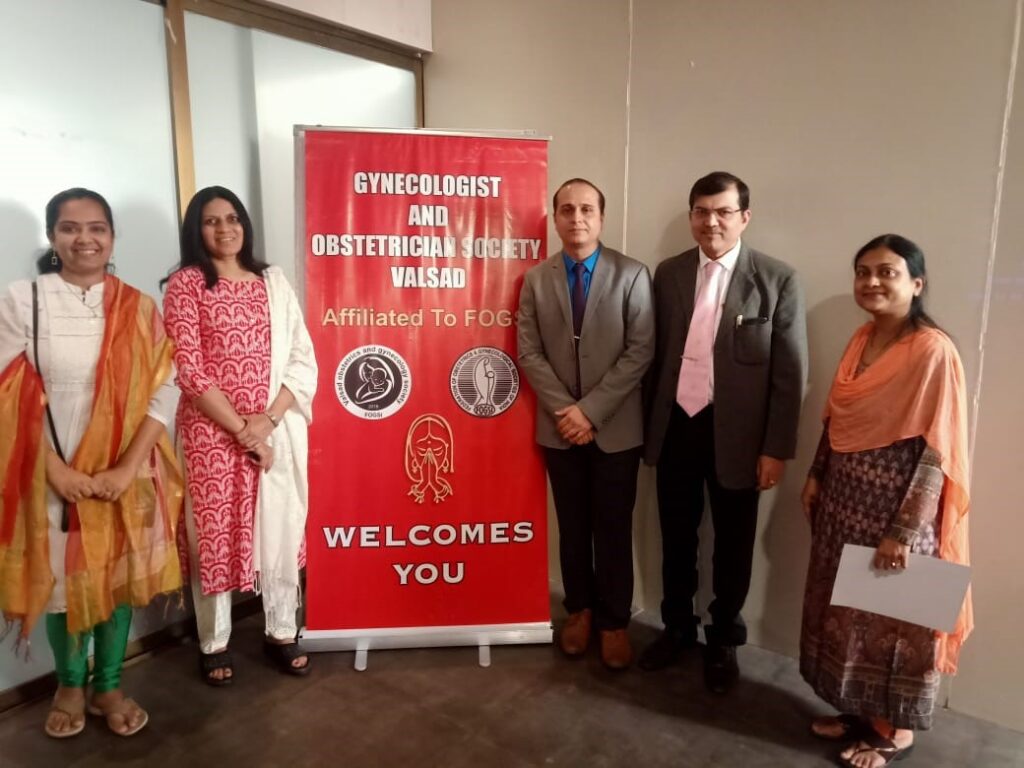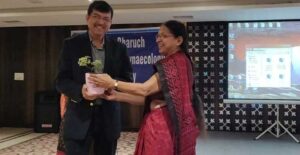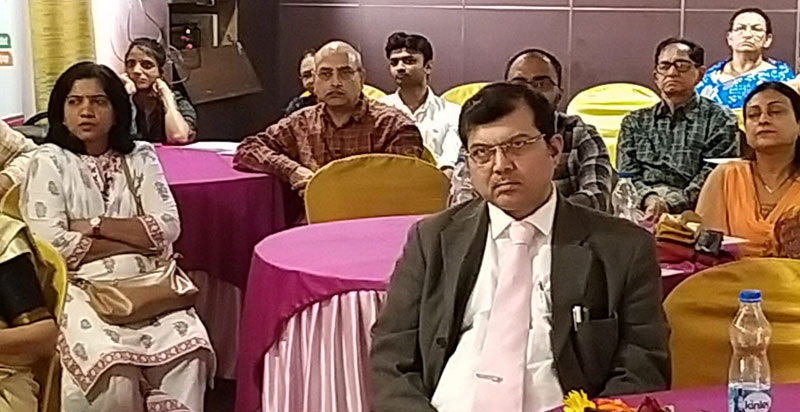
It was an honour to deliver three lectures on first-trimester ultrasound at a Continuing Medical Education programme organised by the Valsad Obstetrics and Gynaecological Society. Being invited to speak at length on a subject so central to modern antenatal care, before a roomful of committed clinicians, was a responsibility I was glad to take on behalf of Paaranu Women’s Superspecialities.
The first trimester is a remarkable and decisive window in pregnancy. So much of what shapes a safe pregnancy is established in these early weeks, and the ultrasound scan performed during this period is one of the most powerful tools we have. Across the three lectures, my aim was to take the audience from the fundamentals through to the finer points, so that clinicians of every level of experience could take something practical back to their own practice.
We began with the essentials, confirming pregnancy, establishing accurate dating, identifying the number of babies and their chorionicity in the case of twins, and confirming that the pregnancy is correctly located. These may sound routine, but getting them right early prevents a great deal of confusion and anxiety later. Accurate dating alone underpins every decision that follows through the rest of the pregnancy.
We then moved to the role of the first trimester scan in early screening. The careful assessment of markers during this window, combined with the mother’s history and other tests, allows us to identify pregnancies that may need closer attention. Detecting concerns early gives families the gift of time, time to understand, to seek expert opinion, and to plan care calmly rather than in crisis.
The third area focused on technique and the common pitfalls that even experienced sonologists encounter. Ultrasound is highly operator dependent, which means that skill, patience and a systematic approach directly affect the quality of information we obtain. I shared practical tips on optimising images, avoiding misinterpretation, and knowing when a finding warrants a second look or referral. Honest discussion of where things can go wrong is often more useful than any amount of theory.
What I value most about a CME like this is that it is a two way exchange. The questions from the members of the Valsad Obstetrics and Gynaecological Society were sharp and grounded in real cases, and the discussion sharpened my own thinking as much as I hope my lectures added to theirs. Medicine advances when clinicians learn together in this way.
At Paaranu, we hold that raising the standard of first trimester care across the whole region benefits every mother and baby, not only those we see ourselves. When more clinicians scan confidently and accurately in these crucial early weeks, outcomes improve everywhere.
I am grateful to the Valsad Obstetrics and Gynaecological Society for organising such a well run programme and for their gracious hospitality, and I thank every participant for their enthusiasm and engagement. Teaching is one of the great privileges of our profession, and I look forward to many more such opportunities to share and to learn.