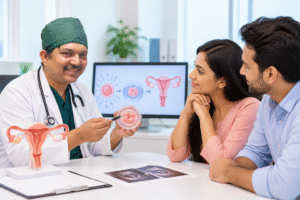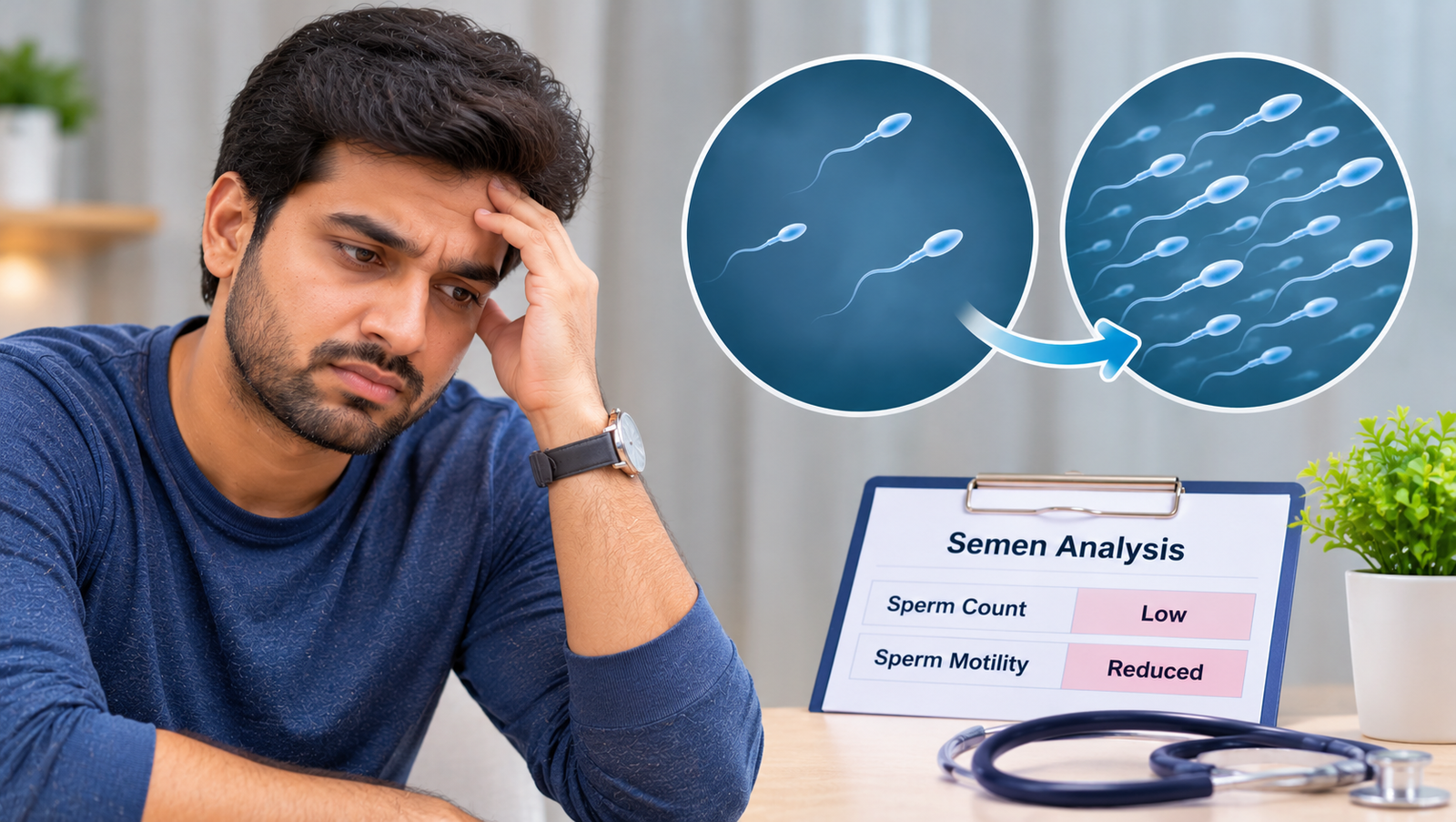
Oligospermia refers to a sperm concentration below 16 million per ml, based on the WHO 2021 lower reference limit. Oligospermia treatment in Surat depends on the underlying cause and may include lifestyle changes, hormonal medicines, varicocele repair or assisted reproductive treatments such as IUI, IVF and ICSI.
Low sperm count is a common male fertility concern that can reduce the likelihood of natural conception. However, having oligospermia does not necessarily mean that a man cannot father a child. Appropriate diagnosis and treatment may improve reproductive prospects.
At Paaranu IVF, Dr. Jayesh Patel (MD, DGO, 25+ years of experience) provides personalised fertility assessments to help couples identify underlying fertility problems and explore suitable treatment options.
What Are the Common Causes of Low Sperm Count?
Oligospermia can develop due to medical conditions, hormonal disturbances, environmental exposure or lifestyle factors. In some cases, the exact cause remains unidentified despite detailed investigations.
Hormonal imbalances
Hormones such as testosterone, follicle-stimulating hormone (FSH) and luteinising hormone (LH) play important roles in sperm production.
Abnormal hormone levels may interfere with normal testicular function and reduce sperm concentration.
Varicocele
A varicocele is an enlargement of veins surrounding the testicle. It may affect testicular temperature regulation and sperm production in some men.
Not every varicocele causes infertility or requires surgery.
Infections and medical conditions
Certain reproductive tract infections, uncontrolled diabetes and other medical conditions may affect sperm production or quality.
Previous testicular injuries, surgeries and cancer treatments may also contribute to fertility difficulties.
Lifestyle and environmental factors
Several lifestyle factors may negatively influence sperm health, including:
- Smoking and tobacco consumption.
- Excessive alcohol intake.
- Obesity and physical inactivity.
- Anabolic steroid use.
- Frequent exposure to excessive heat.
- Exposure to certain industrial chemicals.
- Poor sleep and nutritional habits.
Genetic abnormalities and developmental conditions may also contribute to severely reduced sperm production.
Identifying the underlying cause is an important part of oligospermia treatment in Surat because different causes require different management approaches.
Which Tests Does a Low Sperm Count Doctor in Surat Recommend?
A comprehensive male fertility assessment helps determine whether low sperm count is temporary, persistent or associated with an underlying medical condition.
Semen analysis
Semen analysis is usually the initial investigation for male infertility.
It measures sperm concentration, total sperm count, motility, morphology and semen volume.
Since sperm parameters can fluctuate, repeat testing may be necessary before establishing a diagnosis.
Patients can learn more about the semen analysis test in Surat and how laboratory findings are interpreted.
Hormonal investigations
Blood tests may be recommended to evaluate testosterone, FSH, LH and other hormones when clinically indicated.
These investigations can help identify hormonal conditions affecting sperm production.
Physical examination
A specialist may examine the testicles and surrounding structures to assess testicular size, possible varicocele and other abnormalities.
Ultrasound examination
Scrotal ultrasound may be recommended when physical examination findings are uncertain or when specific structural abnormalities are suspected.
Genetic testing
Men with severely reduced sperm concentrations may require genetic investigations, depending on their medical history, hormone levels and clinical findings.
The specialist may also recommend fertility evaluation for the female partner. Understanding both partners’ reproductive health helps determine the most appropriate treatment strategy.
How Can Lifestyle Changes and Medicines Increase Sperm Count?
Men searching for how to increase sperm count should understand that treatment effectiveness depends on the underlying cause. Lifestyle improvements may support sperm health, but they cannot correct every medical or genetic condition.
Follow a balanced diet
A nutritious diet containing vegetables, fruits, whole grains, nuts and adequate protein supports general reproductive health.
Foods containing zinc, selenium and antioxidants may contribute to normal cellular function. However, no individual food can guarantee an increase in sperm count.
Avoid tobacco and excessive alcohol
Smoking and excessive alcohol consumption may negatively affect sperm production, movement and DNA integrity.
Reducing these exposures can support overall reproductive health.
Maintain a healthy body weight
Obesity may contribute to hormonal disturbances and reduced semen quality.
Regular physical activity and sustainable weight management may help improve metabolic and hormonal health.
Reduce excessive heat exposure
Frequent exposure to high temperatures may temporarily affect sperm production.
Men should consider limiting prolonged hot baths, saunas and occupational heat exposure where practical.
Take medicines only when prescribed
Hormonal medicines may be beneficial for selected patients with specific endocrine disorders.
However, testosterone replacement therapy and anabolic steroids can suppress sperm production. Men planning pregnancy should discuss these medicines with their fertility specialist.
Medical management of oligospermia treatment in Surat should be based on confirmed clinical findings rather than unverified supplements or self-medication.
Explore available male infertility treatment options to understand how different fertility conditions are managed.
When Is Varicocele Surgery Recommended for Low Sperm Count?
Varicocele is a potentially treatable cause of male infertility in selected patients. Enlarged veins around the testicle may contribute to increased local temperature and oxidative stress, which can affect sperm production.
Varicocele repair may be considered when a man has:
- A clinically detectable varicocele.
- Abnormal semen analysis results.
- Difficulty conceiving with a partner.
- Clinical findings suggesting that treatment may be beneficial.
Surgical treatment aims to redirect blood flow away from affected veins.
Some men may experience improvements in semen parameters following successful varicocele repair. However, results vary, and surgery does not guarantee natural pregnancy.
Men with severe oligospermia, additional infertility factors or limited reproductive time may require assisted reproductive treatment instead of waiting for surgical outcomes.
The decision should consider both partners’ ages, fertility assessments and reproductive goals.
When Are IUI, IVF and ICSI Recommended Based on Oligospermia Severity?
When sperm concentration remains low despite appropriate management, assisted reproductive techniques may help couples pursue pregnancy.
The choice of treatment depends on sperm concentration, motility, total motile sperm count, female partner’s fertility and previous treatment outcomes.
Oligospermia severity and treatment comparison
| Severity | Sperm concentration | Usual treatment options |
|---|---|---|
| Mild oligospermia | [Doctor-approved range] | Lifestyle management, treatment of underlying causes, timed intercourse or IUI |
| Moderate oligospermia | [Doctor-approved range] | Medical management, selected IUI or IVF |
| Severe oligospermia | [Doctor-approved range] | Detailed investigations, IVF with ICSI when indicated |
| Extremely low sperm concentration | [Doctor-approved range] | Specialist evaluation, genetic testing when indicated and ICSI consideration |
Intrauterine insemination (IUI)
IUI involves preparing sperm in a laboratory and placing it directly into the uterus around ovulation.
It may be suitable for selected couples when sufficient motile sperm are available after processing.
In vitro fertilisation (IVF)
IVF involves collecting eggs and combining them with sperm in a laboratory to achieve fertilisation.
Conventional IVF may be considered depending on sperm quality and other fertility factors.
Intracytoplasmic sperm injection (ICSI)
ICSI involves injecting a single viable sperm into a mature egg under specialised laboratory conditions.
It may help overcome certain fertilisation difficulties associated with severely reduced sperm concentration or poor sperm movement.
Patients considering advanced oligospermia treatment in Surat can explore ICSI treatment in Surat to understand the procedure and its potential benefits.
Although ICSI can help couples with significant male fertility problems, successful fertilisation, pregnancy and live birth are not guaranteed.
Frequently Asked Questions
Oligospermia may improve through lifestyle changes when smoking, obesity, excessive alcohol consumption or other modifiable factors contribute to low sperm count. However, hormonal disorders, genetic conditions and structural abnormalities may require medical treatment. A fertility assessment helps determine whether natural improvement is possible.
Sperm development generally takes approximately two to three months. Therefore, improvements following treatment or lifestyle changes may not appear immediately. A low sperm count doctor in Surat can recommend an appropriate follow-up schedule and repeat semen analysis based on the underlying cause and treatment response.
ICSI is not necessary for every man with low sperm count. It may be recommended when sperm concentration or motility is severely reduced, or when previous fertilisation attempts have failed. The decision depends on semen analysis findings, female fertility factors and the couple’s treatment history.
Certain nutritional supplements may support sperm health in men with specific deficiencies. However, evidence regarding their ability to improve pregnancy and live birth rates remains uncertain. Supplements should not replace medical investigations or prescribed treatment. Consult a fertility specialist before taking antioxidant or hormonal supplements.
Conclusion
Low sperm count can affect natural conception, but appropriate diagnosis and personalised treatment may help couples achieve their reproductive goals.
Oligospermia treatment in Surat may involve lifestyle management, medical treatment, varicocele repair or assisted reproductive techniques. Dr. Jayesh Patel at Paaranu IVF helps patients understand their fertility reports, identify underlying causes and select suitable treatment options based on their individual circumstances.