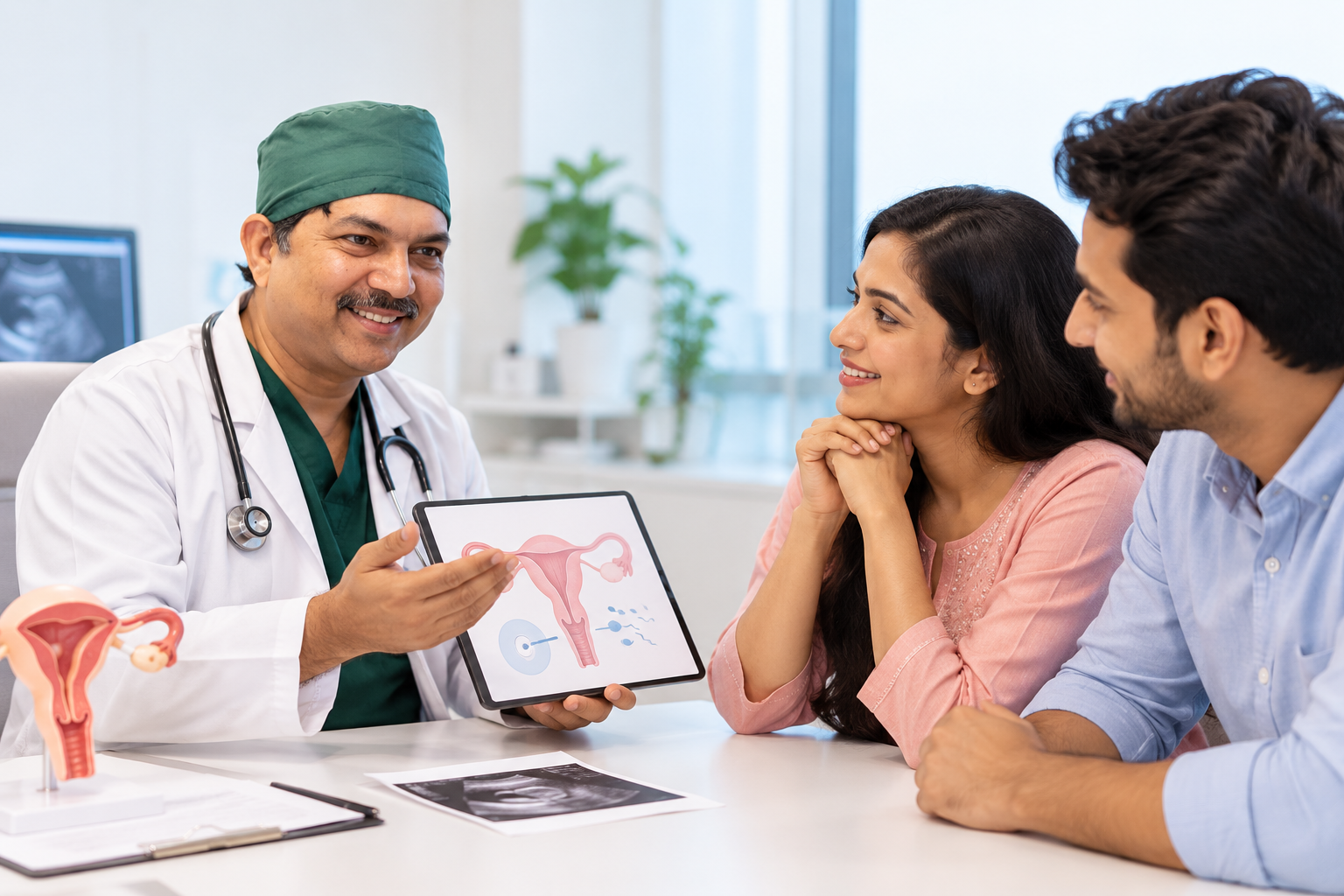
Pregnancy after IUI can bring excitement, hope, and a lot of questions. If you are trying for pregnancy with IUI treatment, understanding what happens after insemination can help you manage the two-week wait with more confidence.
At Paaranu IVF in Surat, IUI and other fertility treatments are provided under the guidance of Dr. Jayesh Patel, MD, D.G.O., Clinical Director & IVF Specialist, who has more than 25 years of experience in gynecology, fertility, and fetal medicine.
When Can Pregnancy Symptoms Start After IUI?
Pregnancy symptoms usually do not begin immediately after IUI. After insemination, sperm must first reach and fertilise the egg. If fertilisation occurs, the developing embryo then travels toward the uterus and may implant several days later.
Possible early signs can include:
- Mild lower abdominal cramps
- Light spotting
- Breast tenderness
- Fatigue
- Nausea
- Bloating
- Increased urination
However, these symptoms do not confirm pregnancy. Progesterone medicines, an hCG trigger injection, and normal hormonal changes after ovulation can produce similar symptoms.
Because of this, the most reliable approach is to wait until your fertility clinic recommends a pregnancy test.
What Is the Pregnancy Timeline After IUI?
The exact timeline can vary from one patient to another, but a general pattern may look like this:
Days 1–3: Fertilisation may occur if sperm reaches the egg around the time of ovulation.
4–6: If fertilisation occurs, the developing embryo continues moving toward the uterus.
6–10: Implantation may occur during this period.
10–14: hCG levels may begin rising enough for pregnancy testing.
Around Day 14: Your fertility specialist may recommend a urine or blood pregnancy test.
Avoid testing too early, especially if you received an hCG trigger injection. Residual medication can sometimes interfere with early pregnancy-test results.
When Should You Take a Pregnancy Test After IUI?
Your fertility clinic will usually tell you exactly when to test.
The NHS advises patients to follow the test date given by their fertility clinic after IUI rather than relying on symptoms alone.
For many patients, testing occurs approximately two weeks after insemination. Your doctor may recommend:
- A home urine pregnancy test
- A blood beta-hCG test
- Repeat blood testing when clinically required
If the result is positive, the fertility team may arrange further follow-up and later ultrasound monitoring.
What Should You Do After IUI?
Most people can return to their usual routine soon after the procedure.
Helpful steps include:
- Take prescribed medicines exactly as advised
- Continue folic acid if your doctor recommends it
- Eat a balanced diet
- Drink enough water
- Get adequate sleep
- Keep follow-up appointments
- Follow your fertility specialist’s instructions
The NHS notes that IUI usually takes only a short time and patients can normally go home after a brief rest.
If you are still preparing for the procedure, read Paaranu IVF’s guide to IUI treatment in Surat. The clinic describes IUI as a procedure in which prepared sperm is placed directly into the uterus around ovulation.
Is Bed Rest Necessary After IUI?
Routine bed rest is usually not necessary after IUI.
Most patients can walk, work, and perform normal daily activities unless their doctor gives specific instructions.
You do not need to worry that walking or standing will cause the sperm to “fall out.” During IUI, the fertility specialist places prepared sperm directly inside the uterus using a thin catheter.
Paaranu IVF notes that most people can return to normal activities on the same day after IUI.
What Should You Avoid After IUI?
You generally do not need extreme restrictions after IUI, but certain precautions support overall pregnancy and fertility health.
Avoid:
- Smoking
- Alcohol
- Recreational drugs
- Taking medicines without medical advice
- Excessive physical strain if your doctor has advised against it
- Missing progesterone or other prescribed fertility medicines
Do not stop fertility medicines just because you notice spotting or mild cramps. Contact your clinic first and follow their instructions.
Can You Exercise After IUI?
Light activity such as walking is usually acceptable.
If you underwent ovarian stimulation, your ovaries may temporarily become larger or more sensitive. In that situation, your doctor may advise avoiding strenuous exercise, high-impact workouts, or activities that cause significant abdominal discomfort.
The level of activity that suits you depends on your treatment protocol and how your ovaries responded.
Is Cramping Normal After IUI?
Mild cramping can occur after IUI and does not necessarily mean anything is wrong.
Possible reasons include:
- The catheter passing through the cervix
- Ovulation
- Hormonal medicines
- Normal uterine activity
- Possible implantation later in the cycle
Cramping alone cannot tell you whether the IUI has succeeded.
Is Spotting Normal After IUI?
Some patients notice mild spotting after IUI.
This may result from minor cervical irritation caused by the catheter. Light spotting can also occur later for other reasons.
You should contact your fertility clinic if you experience heavy bleeding, severe pain, or symptoms that concern you.
What Symptoms Should You Watch for After IUI?
Some patients notice no symptoms at all during the two-week wait and still receive a positive pregnancy test.
Others may notice:
- Mild cramps
- Breast tenderness
- Bloating
- Fatigue
- Nausea
- Increased vaginal discharge
- Light spotting
These symptoms can result from pregnancy, progesterone, fertility medicines, or normal hormonal changes. Therefore, they should not replace pregnancy testing.
When Should You Contact Your Fertility Doctor?
Seek medical advice if you develop:
- Severe or increasing abdominal pain
- Heavy vaginal bleeding
- Persistent vomiting
- Fainting or severe dizziness
- Significant abdominal swelling
- Difficulty breathing
- Fever
- Any symptoms your fertility clinic has told you to report urgently
Patients who used ovarian-stimulation medicines should follow any specific warning signs given by their fertility specialist.
When Can Pregnancy Be Confirmed After IUI?
A positive pregnancy test provides the first indication that treatment may have succeeded.
Your fertility specialist may then recommend additional blood testing and an ultrasound at the appropriate stage to confirm:
- The location of the pregnancy
- Gestational development
- Fetal heartbeat when it becomes visible
- Whether there is one pregnancy or more than one
Do not worry if an ultrasound performed too early does not yet show all expected findings. Your doctor will time the scan according to your treatment and pregnancy dates.
Can an IUI Pregnancy Be Different From a Natural Pregnancy?
Once pregnancy begins, an IUI pregnancy generally develops through the same biological stages as a naturally conceived pregnancy.
The main difference lies in how sperm reaches the uterus.
During IUI, prepared sperm is placed directly inside the uterus around ovulation. Fertilisation still occurs inside the reproductive tract. Paaranu IVF explains that this differs from IVF, where eggs and sperm are combined in a laboratory before an embryo is transferred.
If you want to compare other fertility options, you can review Paaranu IVF’s fertility treatments in Surat, which include IUI, IVF, ICSI, IMSI, and other assisted-reproduction treatments.
Can IUI Lead to Twins?
IUI itself does not directly cause twins.
However, when doctors combine IUI with ovarian-stimulation medicines, more than one follicle may sometimes mature. If multiple eggs are released and fertilisation occurs, the chance of multiple pregnancy can increase.
Your fertility specialist monitors follicular development to assess this risk and may adjust or cancel treatment when necessary.
What Happens If the Pregnancy Test Is Negative?
A negative result can be disappointing, but one unsuccessful IUI cycle does not necessarily mean future treatment will fail.
Your fertility specialist may review:
- Your age
- Ovulation timing
- Follicle response
- Sperm quality
- Fallopian tube status
- Previous treatment history
- Number of IUI cycles attempted
The doctor may recommend another IUI cycle or discuss a different treatment depending on your individual fertility diagnosis.
If you are unsure about the next step, you can consult a fertility specialist in Surat for a personalised assessment. Paaranu IVF states that treatment selection depends on the cause of infertility, age, and medical history.
How Can You Improve Your Chances After IUI?
No food, activity, or home remedy can guarantee that an IUI cycle will result in pregnancy.
The most useful steps include:
- Following prescribed medicines correctly
- Attending monitoring appointments
- Avoiding smoking and alcohol
- Taking recommended prenatal supplements
- Maintaining a balanced diet
- Managing existing medical conditions
- Following your fertility specialist’s advice
Try not to make major treatment changes based on internet advice during the two-week wait.
Why Choose Paaranu IVF for IUI Treatment in Surat?
Paaranu IVF provides IUI along with IVF, ICSI, IMSI, male infertility treatment, and other fertility services in Surat.
The clinic’s IUI service is medically reviewed by Dr. Jayesh Patel, MD, D.G.O., Clinical Director & IVF Specialist, and focuses on individualised fertility assessment and treatment planning.
Patients can learn more about the complete procedure through the clinic’s IUI treatment in Surat.
Frequently Asked Questions About Pregnancy With IUI Treatment
Can I walk after IUI?
Yes. Most patients can walk and perform normal daily activities after IUI unless their doctor advises otherwise. Paaranu IVF states that most people return to normal activities on the same day.
Is bed rest needed after IUI?
Routine bed rest is usually unnecessary. Your doctor may provide different instructions if you have specific medical concerns or experienced a strong response to ovarian-stimulation medicines.
Does cramping mean IUI has worked?
No. Cramping can occur because of ovulation, the IUI procedure, fertility medicines, or normal hormonal changes. It does not confirm pregnancy.
Can I take a pregnancy test seven days after IUI?
Seven days is often too early to obtain a reliable result. Follow the pregnancy-test date given by your fertility clinic. The NHS specifically advises patients to test when instructed by their fertility service.
Is light spotting normal after IUI?
Light spotting may occur after IUI because the catheter can mildly irritate the cervix. Contact your fertility specialist if the bleeding becomes heavy or you experience severe pain.
Can I have no symptoms and still be pregnant after IUI?
Yes. Some women experience few or no noticeable symptoms before receiving a positive pregnancy test. Symptoms alone cannot confirm or exclude pregnancy.
What happens after a positive IUI pregnancy test?
Your fertility clinic may recommend blood testing, continued medicines, and an ultrasound at the appropriate stage. Follow the schedule provided by your fertility specialist.
Conclusion
The days after IUI can feel uncertain, especially when every cramp or symptom seems meaningful. However, early symptoms cannot reliably confirm whether treatment has worked.
For a healthy pregnancy with IUI treatment, take your prescribed medicines, maintain normal healthy routines, avoid harmful substances, and wait until the date recommended by your fertility clinic before testing.
If you are planning IUI or need guidance after treatment, Paaranu IVF provides personalised fertility care and follow-up in Surat.