Donor egg IVF can offer a treatment option for women who cannot use their own eggs successfully because of reduced ovarian reserve, age-related decline in egg quality, premature ovarian insufficiency, certain genetic conditions, or repeated IVF failure. One of the most common questions couples ask is about donor eggs for IVF cost. In India, the overall expense depends on the donor egg program, IVF laboratory charges, medicines, embryo transfer, ICSI if required, cryopreservation, and other individual treatment needs.
At Paaranu IVF in Surat, fertility treatment is led by Dr. Jayesh Patel, MD, D.G.O., Clinical Director, who has more than 25 years of experience in gynecology, fertility, and fetal medicine.
What Is Donor Egg IVF?
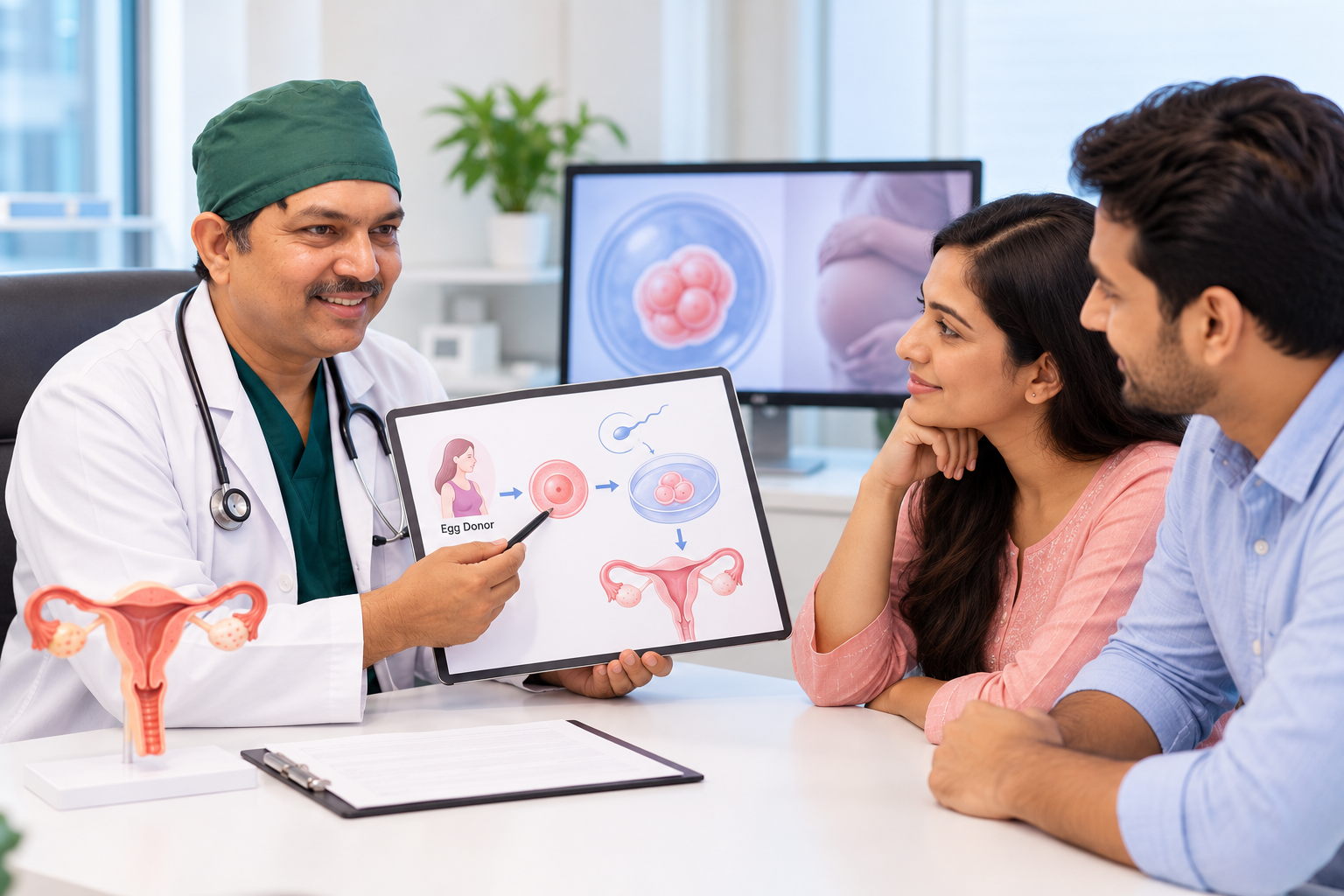
Donor egg IVF is a form of in vitro fertilization in which doctors use eggs from an eligible donor instead of eggs from the intended mother.
The basic process involves:
- Obtaining donor eggs through an appropriate ART program.
- Fertilizing the eggs with sperm in an IVF laboratory.
- Monitoring embryo development.
- Preparing the intended mother’s uterus.
- Transferring a suitable embryo into the uterus.
- Performing a pregnancy test at the recommended time.
The intended mother carries the pregnancy after embryo transfer if her uterus and overall health allow pregnancy.
Paaranu IVF also offers standard IVF treatment in Surat along with other assisted reproductive treatments.
How Much Do Donor Eggs for IVF Cost in India?
The donor eggs for IVF cost varies considerably between fertility centres and treatment plans.
Current published India-wide estimates suggest that donor eggs alone may add approximately ₹80,000 to ₹1,50,000 to treatment, while a complete IVF cycle involving donor eggs may cost roughly ₹2.5 lakh to ₹5 lakh in some centres. These figures are general market estimates and should not be treated as Paaranu IVF’s confirmed pricing.
The final egg donation IVF cost can vary depending on:
- Donor egg-related charges
- Fertility investigations
- Recipient medicines
- Sperm preparation
- IVF laboratory charges
- ICSI, if required
- Embryo culture
- Embryo transfer
- Embryo freezing
- Storage charges
- Additional fertility procedures
- Number of treatment cycles
Ask your fertility clinic for an itemised estimate before starting treatment.
Why Is Donor Egg IVF More Expensive Than Standard IVF?
Standard IVF usually involves ovarian stimulation and egg retrieval from the intended mother.
With donor egg IVF, the treatment also involves donor-related medical evaluation, ovarian stimulation, egg retrieval, ART-bank or donor-program processes, screening, consent requirements, and coordination between the donor cycle and recipient treatment.
These additional steps increase the overall cost.
The final amount may also rise if the couple needs ICSI, blastocyst culture, embryo freezing, genetic testing, or a frozen embryo transfer.
Who May Need Donor Egg IVF?
A fertility specialist may discuss donor egg IVF when the intended mother’s own eggs have a low likelihood of producing a viable pregnancy.
Possible situations include:
- Very low ovarian reserve
- Premature ovarian insufficiency
- Advanced reproductive age with poor egg quality
- Repeated poor response during IVF
- Repeated failure to produce suitable embryos
- Certain inherited genetic disorders
- Previous ovarian surgery
- Medical treatment that damaged ovarian function
- Absence of usable eggs
Age alone does not automatically mean a woman needs donor eggs.
The doctor should review ovarian reserve, medical history, previous IVF results, uterine health, and the couple’s fertility goals before recommending treatment.
Paaranu IVF provides a dedicated guide to donor egg IVF in Surat for patients who want to understand eligibility and treatment planning in more detail.
How Does the Donor Egg IVF Process Work?
The process usually includes several stages.
1. Fertility Evaluation
The fertility specialist first assesses the intended parents.
Tests may include:
- Hormone tests
- Pelvic ultrasound
- Uterine evaluation
- Semen analysis
- Infection screening
- General medical assessment
- Previous IVF records
The doctor also checks whether pregnancy is medically appropriate for the intended mother.
2. Donor Screening and Eligibility
Egg donors must meet applicable medical and regulatory requirements.
India’s Assisted Reproductive Technology framework includes specific consent, screening, documentation, and donor-management requirements for oocyte donation.
A donor program may review:
- Medical history
- Family history
- Reproductive history
- Infectious disease screening
- Genetic information where applicable
- General health
Patients should use donor eggs only through appropriately regulated ART systems.
3. Donor Ovarian Stimulation
The donor receives fertility medicines that stimulate the ovaries to develop multiple follicles.
The fertility team monitors follicle development with ultrasound and, when necessary, blood tests.
4. Egg Retrieval
Doctors collect mature eggs from the donor after ovarian stimulation.
The ART Regulations include requirements relating to controlled ovarian stimulation and retrieval of donor oocytes.
5. Fertilisation
Embryologists fertilise the donor eggs with sperm from the intended father or another legally and medically appropriate source.
Depending on sperm quality and treatment requirements, the laboratory may use conventional IVF or ICSI.
6. Embryo Culture
The laboratory monitors fertilised eggs as they develop into embryos.
The team assesses embryo development before selecting an embryo for transfer or freezing.
7. Preparing the Recipient’s Uterus
The intended mother may receive medicines to prepare the endometrium for embryo implantation.
The fertility team monitors the uterine lining and plans embryo transfer at the appropriate time.
8. Embryo Transfer
The fertility specialist places a selected embryo into the uterus using a thin catheter.
Indian ART regulations also address the number of embryos that clinicians may transfer during treatment.
9. Pregnancy Test
The clinic schedules a pregnancy test after embryo transfer.
If the test is positive, the fertility specialist may recommend blood tests and ultrasound monitoring.
Is ICSI Necessary With Donor Egg IVF?
Not always.
ICSI involves injecting a single sperm directly into an egg.
Doctors may recommend it when:
- Sperm count is very low
- Sperm movement is poor
- Surgically retrieved sperm is used
- Previous fertilisation has failed
- The fertility team identifies another clear indication
If sperm quality is suitable, conventional IVF may sometimes be appropriate.
Paaranu IVF provides IVF, ICSI, IMSI, and other advanced fertility treatments.
What Affects Egg Donation IVF Cost?
Several factors can change the total egg donation IVF cost.
Donor Program Charges
Donor-related screening, stimulation, monitoring, egg retrieval, and ART-bank processes can contribute significantly to the total expense.
Medicines
The recipient may require hormonal medicines to prepare the uterus.
Medication type and duration vary from patient to patient.
IVF Laboratory Charges
Embryology procedures, fertilisation, embryo culture, and laboratory monitoring form part of the overall treatment cost.
ICSI or Other Procedures
ICSI, blastocyst culture, assisted hatching, or other clinically indicated procedures may increase the total cost.
Embryo Freezing
If suitable embryos remain after transfer, patients may choose cryopreservation for future use.
You can learn more about cryopreservation in Surat and other fertility services offered at Paaranu IVF.
Number of IVF Cycles
No IVF cycle can guarantee pregnancy.
If treatment does not succeed and another cycle is required, total expenditure increases.
What Is the Success Rate of Donor Egg IVF?
There is no single success percentage that applies to every patient.
Donor egg IVF outcomes depend on several factors, including:
- Donor egg quality
- Sperm quality
- Embryo development
- Uterine health
- Endometrial preparation
- General health of the intended mother
- Embryology laboratory standards
- Previous reproductive history
One important difference from IVF using the intended mother’s own eggs is that embryo potential relates strongly to the age and quality of the egg donor’s eggs, rather than only the recipient’s age.
However, the recipient’s uterine and general health still matter.
No responsible clinic should promise guaranteed pregnancy or a guaranteed live birth.
Does Donor Egg IVF Have a Higher Success Rate Than IVF With Own Eggs?
For some women with severely reduced egg quality or ovarian reserve, donor eggs may offer a better chance of producing suitable embryos than continuing IVF with their own eggs.
However, this does not mean donor egg IVF always works.
Success still depends on:
- Egg quality
- Sperm quality
- Fertilisation
- Embryo development
- Implantation
- Uterine conditions
- Maternal health
The fertility specialist should compare realistic treatment options based on the patient’s diagnosis rather than recommending donor eggs solely because of age.
Can Donor Egg IVF Work on the First Attempt?
Yes, pregnancy can occur after the first donor egg IVF cycle, but success is never guaranteed.
Some patients may need more than one embryo transfer or treatment cycle.
A failed first cycle does not necessarily mean future treatment will fail.
Doctors may review:
- Embryo development
- Endometrial response
- Sperm factors
- Transfer details
- Medical conditions
- Remaining frozen embryos
before planning the next step.
Can Extra Embryos From Donor Egg IVF Be Frozen?
Yes, suitable additional embryos may be cryopreserved when medically appropriate.
Frozen embryos may then be used in a later frozen embryo transfer cycle without repeating the full donor egg retrieval process.
However, storage and future use remain subject to consent, clinic policies, and applicable ART regulations.
Is Donor Egg IVF Safe?
Donor egg IVF is an established assisted reproductive treatment, but no fertility treatment is completely risk-free.
Possible considerations include:
- Medicine-related side effects
- Embryo transfer-related discomfort
- Multiple pregnancy if more than one embryo is transferred
- Ectopic pregnancy
- Miscarriage
- Pregnancy-related medical complications
- Emotional and psychological considerations surrounding donor conception
Your fertility specialist should discuss the risks and benefits before treatment begins.
Are Donor Eggs Regulated in India?
Yes.
Egg donation and other assisted reproductive procedures in India fall under the Assisted Reproductive Technology (Regulation) Act and Rules.
The rules include requirements relating to donor consent, documentation, screening, oocyte retrieval, confidentiality, and ART clinic or bank practices. DHR
Patients should therefore avoid informal or unregulated donor arrangements.
For an authoritative reference, see the Government of India’s ART Rules 2022 issued by the Department of Health Research.
Can You Choose the Egg Donor Yourself?
Donor selection in India must follow the applicable ART legal and regulatory framework.
The process should not be treated like an informal personal selection arrangement.
The ART clinic and ART bank must follow relevant rules regarding donor eligibility, confidentiality, records, consent, and allocation.
Couples should ask their fertility centre to explain exactly how donor matching and donor confidentiality work under current regulations.
Does the Baby Have the Intended Mother’s Genes?
When donor eggs are used, the nuclear genetic material from the egg comes from the egg donor.
If sperm from the intended father is used, the embryo receives genetic material from him as well.
The intended mother does not contribute the egg’s nuclear DNA, but she carries the pregnancy and provides the uterine environment in which the fetus develops.
Patients considering donor conception should receive clear counselling before treatment so they understand the medical, genetic, emotional, and legal aspects.
What Questions Should You Ask About Donor Egg IVF Cost?
Before beginning treatment, ask your fertility clinic:
- What does the quoted donor egg IVF cost include?
- Are donor-related charges included?
- Are recipient medicines included?
- Does the fee include ICSI?
- Are embryo culture charges included?
- Is embryo transfer included?
- How much does embryo freezing cost?
- Are annual storage fees separate?
- What happens financially if a cycle gets cancelled?
- What would a later frozen embryo transfer cost?
- Which tests require separate payment?
An itemised quotation makes it easier to compare treatment plans accurately.
Is Donor Egg IVF Cheaper if Frozen Donor Eggs Are Used?
The total cost can differ depending on whether a treatment program uses fresh or cryopreserved donor eggs and how the clinic or ART bank structures its services.
However, the cheapest option is not automatically the most appropriate.
Patients should discuss:
- Egg availability
- Laboratory method
- Number of eggs
- Treatment timing
- Embryology plan
- Expected costs
with their fertility specialist.
Why Choose Paaranu IVF for Donor Egg IVF in Surat?
Paaranu IVF provides fertility evaluation and assisted reproductive treatments in Surat, including IVF, ICSI, IMSI, cryopreservation, and other advanced fertility services.
The clinic is led by Dr. Jayesh Patel, MD, D.G.O., Clinical Director, who has more than 25 years of experience in gynecology, fertility, and fetal medicine.
Couples considering donor eggs can first undergo an individual fertility assessment to understand whether donor egg IVF is medically appropriate and what their personalised treatment plan may involve.
For detailed local information, visit Paaranu IVF’s Donor Egg IVF in Surat page.
Is Donor Egg IVF Right for You?
Donor egg IVF may help women who cannot obtain suitable eggs through their own IVF treatment because of very low ovarian reserve, premature ovarian insufficiency, repeated poor response, severe age-related egg decline, certain genetic concerns, or other medical factors.
However, the decision should follow a complete fertility assessment.
The fertility team should explain:
- Why donor eggs are being recommended
- Whether alternatives remain available
- Expected treatment steps
- Possible risks
- Legal and consent requirements
- Realistic chances of success
- Complete donor eggs for IVF cost
The best treatment decision is one based on medical suitability rather than cost or advertised success rates alone.
Frequently Asked Questions
How much does donor egg IVF cost in India?
Published India-wide estimates suggest that complete donor egg IVF treatment may cost approximately ₹2.5 lakh to ₹5 lakh, depending on the clinic, medicines, donor-related charges, laboratory procedures, embryo transfer, and additional treatments. This is a general market estimate, not Paaranu IVF’s fixed price.
How much do donor eggs alone cost in India?
Some current published estimates place donor-egg-related additional costs around ₹80,000 to ₹1,50,000, but charges vary considerably.
Is donor egg IVF legal in India?
Yes, assisted reproductive treatment involving donor oocytes operates under India’s ART regulatory framework. Clinics and ART banks must follow applicable requirements for donor consent, records, screening, confidentiality, and treatment.
Can donor egg IVF guarantee pregnancy?
No. Donor eggs may improve the chance of obtaining suitable embryos in selected patients, but no clinic can guarantee pregnancy or live birth.
Is the egg donor’s identity disclosed?
India’s ART framework includes confidentiality requirements for donor information. Patients should ask their registered ART clinic to explain how donor information and confidentiality apply to their specific treatment.
Can donor egg IVF be used after repeated IVF failure?
It may be considered when repeated IVF failure relates significantly to poor egg quality, low ovarian reserve, or repeated failure to obtain suitable embryos. A fertility specialist should first review why previous cycles failed.
Does the intended mother carry the pregnancy?
Yes. In donor egg IVF, the fertility team transfers the embryo into the intended mother’s uterus, and she carries the pregnancy if implantation occurs and pregnancy progresses.
Is ICSI always required with donor eggs?
No. The fertility specialist and embryologist decide between conventional IVF and ICSI based largely on sperm quality, fertilisation history, and other clinical factors.